🎨 Your entire design department for less than one hire.
Book your call
cross icon
FOR ADTECH STARTUPS

Webflow Website Design for AdTech Startups

Put your platform in context before the sales call. NexaFlow designs and builds Webflow websites that show media buyers, publisher revenue teams and measurement leads where your product fits, how it works and what they can evaluate in a demo.
For advertising technology teams selling media buying, publisher monetization, campaign measurement, creative or data products.
Book a call
Book a call
Plan your AdTech website
Webflow is used by over 200+ SAAS & TECH STARTUPS
Jasper brand name in bold red lowercase letters on a transparent background.Chattermill logobonsai logoWhalesync company logo with stylized blue whale tail icon to the left.Dagster company logo with a stylized purple octopus icon.tability logo

A media buyer should not have to reverse-engineer your platform

arrow right
Product evolves fast, website feels outdated
arrow right
Messaging doesn’t build trust with buyers
arrow right
Early-stage design creates doubt in a regulated space
Website Health
Conversion Rate:
0.9% ↓
Bounce Rate:
68% ↑
Message Clarity:
Low
Last Update:
143 days ago
Answer the questions behind an AdTech shortlist

Where do you sit in the advertising stack?

A buying platform, publisher monetization tool and measurement product solve different problems. We make that distinction visible with a product overview and a diagram showing the systems your platform connects to, replaces or works alongside.

What does the operator actually do?

Turn one real task into a product story: a trader activates a campaign, an ad operations team sets up a deal or an analyst investigates a reporting discrepancy. Annotated screens explain the inputs, decisions and output instead of presenting an unexplained dashboard.

Is the connection ready to use?

A partner logo cannot explain an integration. Give buyers the connection method, supported use, setup requirements and documentation link. Separate an available connector from an API that needs engineering work, and label planned connections clearly.

What does the reported result mean?

Case study layouts should identify the campaign objective, channel, period and measurement method. Attributed conversions and incremental lift answer different questions; the website should preserve that distinction when presenting your results.

Which conversation should happen next?

A brand evaluating campaign measurement needs a different demo from a publisher exploring demand access. Use audience pages and role-specific form questions to tell your sales team who is asking, what they use today and what they want to test.
Build a website around the buying decision
The page plan starts with your place in the advertising ecosystem. For a media buying product, that may mean activation and channel pages; for publisher technology, inventory and demand workflows; for measurement, methodology and reporting. We turn the relevant route into website copy, Figma layouts and a Webflow build.
Two location markers connected by a curved path on a light blue background.

Positioning strategy

Pin down the primary user and the decision they own. A trading desk evaluates activation controls, a publisher revenue lead evaluates inventory monetization, and a measurement lead evaluates data and reporting. The homepage gives the right audience a recognizable problem and a clear explanation of your product category.
Reload icon next to a white square showing a blue rising bar chart with an upward arrow.

Conversion-Focused Structure

Design a path from product overview to a useful sales conversation. A supported-channel page can lead to a campaign walkthrough; a publisher page can lead to an inventory discussion; a measurement page can lead to a methodology demo. Forms capture the role, current stack and evaluation goal without asking visitors to submit customer or campaign data.
Black gear icon next to a white card with an upward-right arrow inside a magnifying glass, symbolizing settings and growth or search.

SEO Architecture

Map search intent to the product you actually sell. A programmatic buying workflow, a publisher integration and an attribution methodology deserve separate pages only when each has substantial detail. We plan titles, headings and internal links around those subjects, with this page focused on AdTech website design and Webflow development.
Black target with a blue dart in the center next to a white card showing a blue lightning bolt icon and three lines of text.

Messaging That Speaks to Buyers

Explain the relationship between audience selection, inventory, activation and measurement using the parts your platform handles. Define unfamiliar terms on introductory pages, then let technical evaluators reach implementation details. This gives a marketing lead an understandable overview and an ad operations specialist somewhere to investigate.
Black ascending bar chart with arrow next to white card showing a pie chart with one orange segment.

Content That Supports Growth
‍

Build CMS collections for integrations, channel capabilities and campaign case studies. Integration entries can hold the connection type and setup link; channel entries can hold supported formats; case studies can hold the objective, conditions and result definition. These records give new announcements a useful home beyond a news post.
Black user profile icon next to a white square with a blue arrow trending upward and two grey lines representing text.

Ongoing Optimisation
‍

Track the route from an audience or integration page to a demo request, then compare the inquiries with the roles and use cases your sales team wants. Revisit pages when a connector changes, a channel becomes available or a recurring evaluation question is missing from the site.
Plan your AdTech website

"Fast, thoughtful, and easy to work with"

Young man smiling, wearing a black tuxedo with a white shirt and black bow tie, against a blurred background.
Liam O.
Founder of StellarSearch.ai
Get In Touch
Get In Touch
We fix all of this, fast.
Clipboard with code brackets and a magnifying glass representing code review or inspection.
Diagnose
arrow down
We run a full audit of your product, messaging and current website to uncover what’s blocking conversions.
Clarify
arrow down
We craft a clear story and value proposition so visitors instantly understand what your product does and why it matters.
Design
arrow down
We design your full site in Figma with a premium, conversion-led layout tailored to your product and audience.
Build
arrow down
We develop your site fast inside Webflow with clean structure, smooth interactions and scalable components.
Launch
arrow down
We deploy your new site with tracking, speed optimisation and conversion flows ready from day one.
Abstract circular logo with alternating blue and purple curved strokes surrounding a black center with a white letter N.
NexaFlow
From a product walkthrough to a buyer-ready website
Start with a walkthrough of one representative campaign, publisher or measurement task. We use it to map the product story, sketch the ecosystem diagram, write the key pages and prototype the screen sequence in Figma. The Webflow build then brings those pages, CMS records and inquiry routes together for launch.

Conversion-Focused Webflow Development

We rebuild your website around positioning clarity, structured messaging, and deliberate conversion paths so visitors understand your product and take action.
check icon
Conversion-driven layouts designed for demos and signups
check icon
Strategic homepage structure built around your ICP
check icon
Messaging rewritten for buyers, not engineers
check icon
Scalable Webflow build with full CMS control
check icon
Performance optimisation for speed and usability
Learn More
Learn More

SEO & GEO 
‍

We build a long-term organic acquisition foundation so you are not dependent on paid traffic or outbound alone.
‍
check icon
Keyword research aligned with your product and stage
check icon
Appearing in LLM answers & summaries
check icon
Industry landing pages targeting high-intent terms
check icon
Technical SEO setup and indexing structure
check icon
Content roadmap built around commercial intent
Learn More
Learn More

Ongoing Website Optimisation for Growing Startups

Your website should evolve as your product evolves. We continuously refine structure, messaging, and performance based on real data.
check icon
Continuous messaging refinement as your positioning sharpens
check icon
Landing page creation for new features & campaigns
check icon
Conversion improvements based on user behaviour
check icon
Technical updates and performance monitoring
check icon
Strategic support as you scale and raise
Learn More
Learn More

The details your AdTech website needs to get right

Simple black hierarchical network diagram with one circle connected to two circles below it on a gray background.
Built for Tech, SaaS & AI
We work on the public marketing website: the product explanation, audience routes, evidence and demo handoff. Your bidding engine, ad serving, reporting application and customer data infrastructure remain with your product team.
Black outline of a lightning bolt symbol on a transparent background.
Fast turnarounds
Sequence the build around what buyers need first. A product overview, one operator workflow, the supported integrations and a working demo route can form the initial release; channel expansions and additional campaign stories can follow without rebuilding the page system.
Clear messaging
Make the evidence legible beside the headline. A reporting screenshot needs a metric definition; an attribution result needs its model and window; an experiment needs its comparison. We write and design those details into the page so readers can interpret the claim.
Icon of a computer monitor with a grid of blocks and two gear wheels, representing settings or configuration.
Figma design
Use Figma to work through a stack diagram, annotated campaign screens and a responsive case study layout before development. Sample or anonymized assets can explain the workflow without exposing advertiser names, audience records or confidential campaign settings.
Icon of a funnel-shaped filter with three sections.
Conversion-led thinking
Give a prospective agency, advertiser or publisher a next step that matches their task. Demo requests can identify the channel and existing platform; publisher inquiries can identify inventory format; measurement inquiries can identify the reporting problem. The form becomes context for the first conversation.
Speech bubble icon containing a lightning bolt symbol.
Clear, fast communication
Keep product marketing, ad operations and technical reviewers looking at the same page prototypes. A shared screen-by-screen review helps resolve questions such as which data is illustrative, which connections are live and which controls a buyer can actually see in the demo.

Our Process

01 - Diagnose

We audit your product positioning, compliance context, and conversion structure to identify what weakens credibility.

02 - Clarify

We refine your value proposition so visitors understand what your platform does, who it serves, and why it reduces financial risk.

03 - Design

We design your full site in Figma with a premium, conversion-led layout tailored to your product and audience.

04 - Build

We develop inside Webflow with clean structure, performance optimisation, and scalable components.

05 - Launch

We deploy with tracking, speed optimisation, and structured demo flows ready from day one.

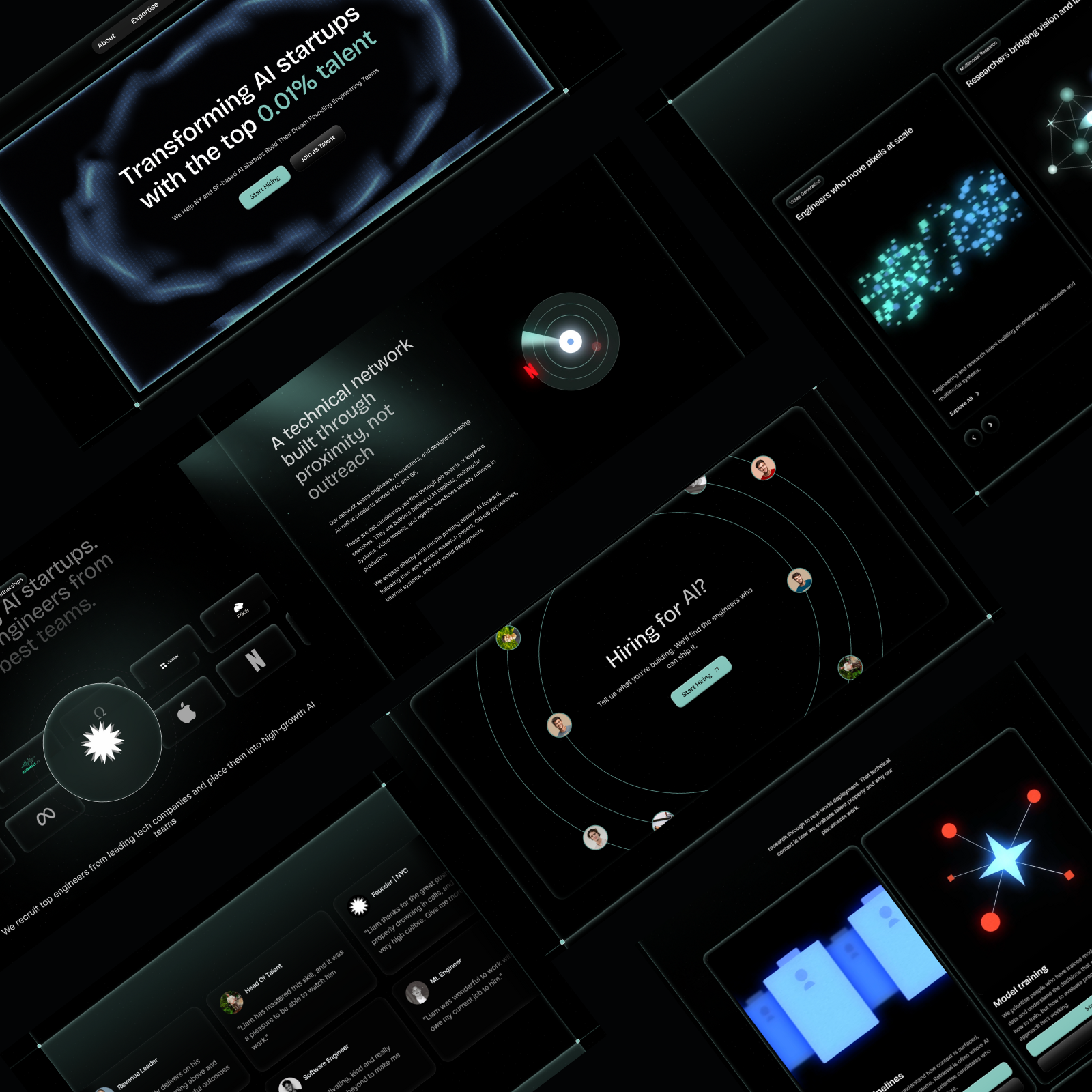
Recent Webflow work

Increase in qualified founder enquiries after launch
100%
AI Talent Recruitment
Building a High-Credibility Webflow Site for an AI Recruiting Partner
Stellarsearch.ai
Read story
Read story
Marketing & Consultancy
Building a Website That Matches a Specialist Marketing Agency
Ascension Marketing
Read story
Read story
Hospitality & Entertainment
Building the Online Presence That Mallorca's Best Dinner Show Deserves
96%
Design fidelity maintained during the build
PropTech
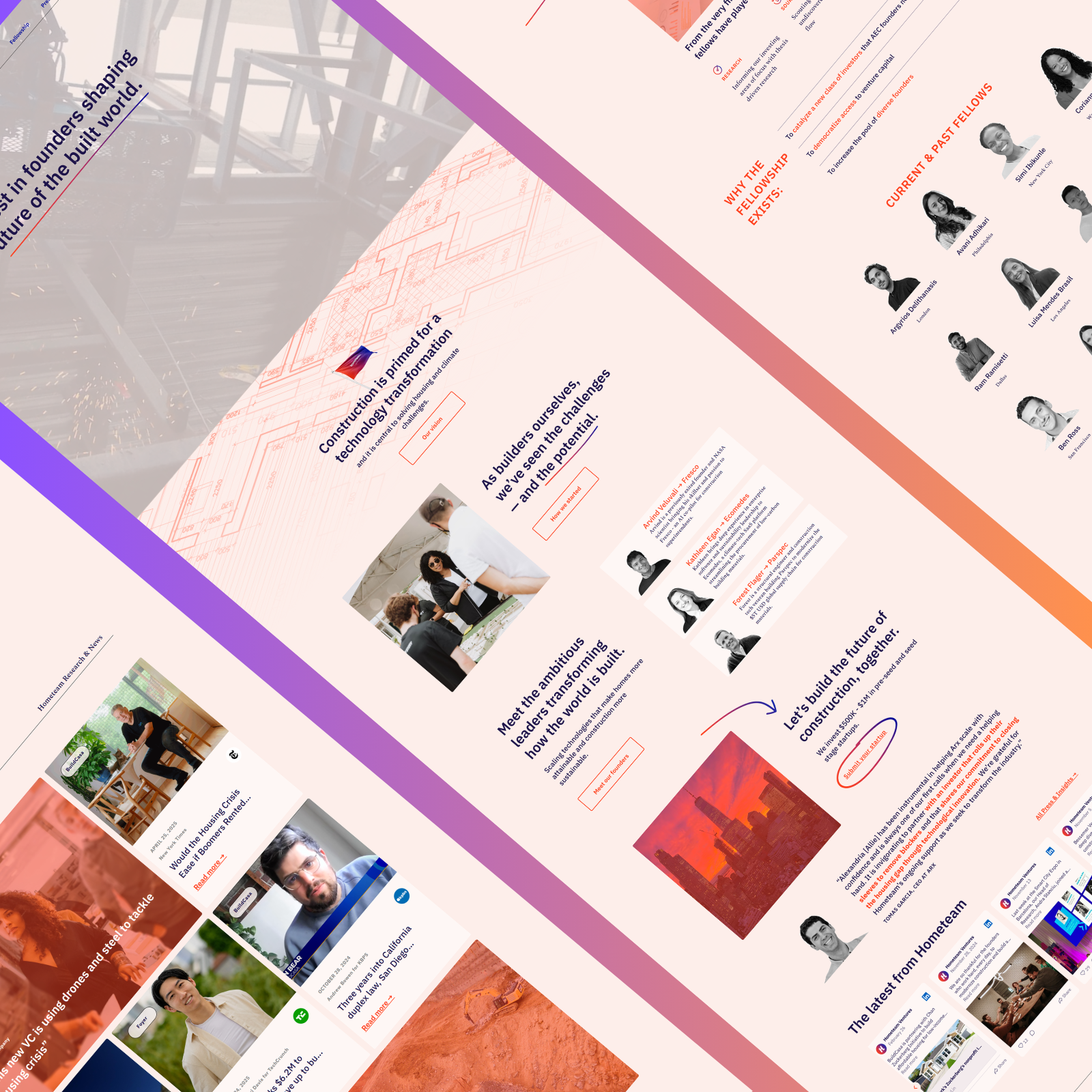
Figma to Webflow Build for a Global PropTech VC Firm
Hometeam Ventures
Read story
Read story

What founders say?

Middle-aged man with glasses, a trimmed beard, and mustache smiling, wearing a white coat and red tie against a gray background.
“World-class professionalism and attention to detail. NexaFlow delivered exactly what we needed on a high-stakes project. Responsive, solutions-driven and a pleasure to work with.”
Dr. Amjad H.
Blue verified checkmark badge with a white check inside.
Founder & CEO
Smiling man in a light gray zip-up sweater typing on a laptop at a table.
“The site speaks for itself. The team were fast to respond, full of ideas, and always ready to help. Reliable, knowledgeable, and easy to work with from start to finish.”
Will S.
Blue verified checkmark badge with a white check inside.
Founder
Blue user profile icon on a light blue background.
“The energy and focus stood out immediately. NexaFlow didn’t just deliver a great website, they made the whole process smooth, collaborative and genuinely enjoyable.”
Magdy M.
Blue verified checkmark badge with a white check inside.
Founder
Young man smiling, wearing a black tuxedo with a white shirt and black bow tie, against a blurred background.
“I’d put my site off for months because I didn’t have time. NexaFlow took my rough ideas and turned them into something clean, sharp and completely on-brand. Fast, thoughtful, and easy to work with. If you’re a founder juggling everything at once, let NexaFlow take this off your plate.”
Liam O.
Blue verified checkmark badge with a white check inside.
Founder of StellarSearch.ai
Frequently Asked Questions
How should an AdTech website explain a DSP, SSP or measurement product?
arrow down
Start with the job and the user, then explain the category. A demand-side product can show how a media buyer activates campaigns; a supply-side product can show how a publisher manages inventory and demand; a measurement product can show what data it uses and how it reports results. We use a stack diagram and a representative workflow to make your specific role clear.
Do we need separate pages for agencies, advertisers and publishers?
arrow down
Only when the product genuinely serves them and their questions differ. An agency may need account workflows and client reporting, an advertiser may need channel and measurement information, and a publisher may need demand access and inventory controls. Each page should show the relevant task and evidence, rather than repeating the same feature list under a different audience name.
What should our integration pages show beyond partner logos?
arrow down
Explain what the connection does, how it is made and what the buyer needs to set it up. Depending on your product, that could be an SDK, API, tag, data import or existing connector. Include supported capabilities and a documentation link, and distinguish available connections from planned ones. A commercial partnership should not be presented as a technical integration unless it is one.
How do you present ROAS, attribution and incrementality claims?
arrow down
We give each result the context needed to read it: objective, channel, campaign period, metric definition and measurement method. If the metric is return on ad spend, state what revenue and spend it includes. Attribution assigns credit under a model; incrementality testing estimates causal lift. We preserve that difference and use evidence your team can support publicly.
What should an AdTech product demo show on the website?
arrow down
Show one task from input to decision to output. For a buying tool, that might be campaign setup and reporting; for publisher software, deal creation and demand controls; for measurement, an event flowing into a report. We can design annotated screens, a short walkthrough or a route to a live demo, using sample or anonymized material where needed.
Where should data-use and supply-chain information sit?
arrow down
Place data-use explanations near the features that depend on them and link to your technical or privacy documentation. If your product participates in the programmatic supply chain, explain the relevant seller relationships and surface existing ads.txt, app-ads.txt or sellers.json resources where appropriate. We organize these materials for evaluation without implying that a logo or document proves compliance or eliminates advertising fraud.
How do you ensure the website supports demo bookings and signups?
arrow down
We structure every page around a clear conversion goal.

That includes refining the value proposition, guiding visitors through a deliberate page flow, placing calls to action strategically, and removing friction from the demo or signup process. Layout decisions are made based on conversion logic, not just visual preference.
What makes your process different from a typical web agency?
arrow down
Most agencies build websites for any type of business.

We work exclusively with tech, SaaS and AI startups. That focus means we understand how founders think, how buyers evaluate software, and what investors look for. Our process is built specifically around startup positioning, conversion, and scalable growth.
How much does a website project typically cost for a startup?
arrow down
Projects start from $4,500, depending on scope and complexity.The final investment depends on the number of pages, depth of messaging work, SEO requirements, and ongoing optimisation needs.
Do you offer fixed pricing or custom proposals?
arrow down
We offer both.

We have Essential and Premium packages designed for common startup needs. If your requirements sit outside those structures, we create a custom proposal aligned with your goals, timeline, and stage of growth.

There’s no one-size-fits-all approach.
Do you require full payment upfront?
arrow down
No. Everything is outlined upfront in your proposal.

Usually, require 40% upfront once the agreement is in place, with the remaining balance due upon launch. This keeps commitment clear on both sides while maintaining project momentum.
Are there ongoing monthly costs after launch?
arrow down
Not necessarily. We provide training at handover so your team can manage the site internally. However, we also offer ongoing support and optimisation packages for startups that prefer continued strategic involvement.
What affects the overall cost of the project?
arrow down
The scope of the project. That includes the number of pages, SEO depth, integrations, and custom functionality. More complexity requires more strategy and build time.
Do you offer staged payments for early-stage startups?
arrow down
Yes. We understand how startups operate and can structure staged payments where appropriate. Everything is discussed transparently before the project begins.
Is SEO included in the initial build, or is it separate?
arrow down
If we build your website, foundational SEO is included in the proposal.

This ensures your site is structured correctly from day one. Ongoing SEO and content strategy can then be layered in at a reduced rate compared to standalone SEO projects.
Why do you use Webflow for tech, SaaS and AI startups?
arrow down
We use Webflow because it combines scalability with flexibility.

It allows us to build structured, high-performance websites without locking you into heavy developer dependency. As your product evolves, your team can manage content, landing pages, and updates internally while maintaining clean architecture and speed.

It’s built for growing teams, not static brochure sites.
Will our team be able to update the site after launch?
arrow down
Yes. You will own the website and have full access.

We provide training on the specific areas your team needs to manage, such as updating CMS content, publishing blog posts, editing landing pages, or making minor structural changes.
Do you handle technical SEO setup?
arrow down
Yes.Technical SEO setup is included within the agreed project scope.

This covers foundational elements such as page structure, indexing, meta configuration, performance optimisation, and clean URL architecture.

If a founder prefers to manage SEO separately, that can be discussed before the project begins.
Can you migrate us from WordPress or another platform?
arrow down
Yes, we regularly migrate websites from WordPress and other platforms. We handle redirects properly to protect existing traffic and ensure there are no disruptions to rankings or user experience. The transition is planned carefully, not rushed.
Is the website scalable as we grow and add new features?
arrow down
Yes, we build with scalability in mind. Whether you’re adding new product features, creating additional landing pages, expanding content, or refining messaging, the structure supports growth without requiring a rebuild.
Do you provide ongoing optimisation after launch?
arrow down
Yes, ongoing optimisation is available through our website management packages. This includes performance monitoring, messaging refinement, new page creation, and conversion improvements as your company grows.
How do you handle performance, speed and security?
arrow down
We build with performance-first. Pages are structured cleanly, assets are optimised, and unnecessary bloat is avoided. Security and hosting are handled through Webflow’s infrastructure, which provides reliable uptime and protection without complicated server management.
Can you support new landing pages as we release features?
arrow down
Yes, as you launch new features or campaigns, we can design and build additional landing pages that align with your positioning and conversion strategy. This is typically handled through our ongoing website management support.
Smiling man with dark curly hair and beard wearing a white dress shirt against a geometric background.
Have more questions?
Reach out to our team here
Contact us
Contact us
From our clients

Show us how your AdTech product works

Bring one product walkthrough and tell us who should request a demo: agencies, brands, publishers or measurement teams. We can map the website around that buyer, from the first product explanation through integration checks to the sales conversation.
A clear place in the stack. A visible operator workflow. A relevant demo request.
Book a Strategy Call
Same-day proposal after your call.