%20(1).avif)



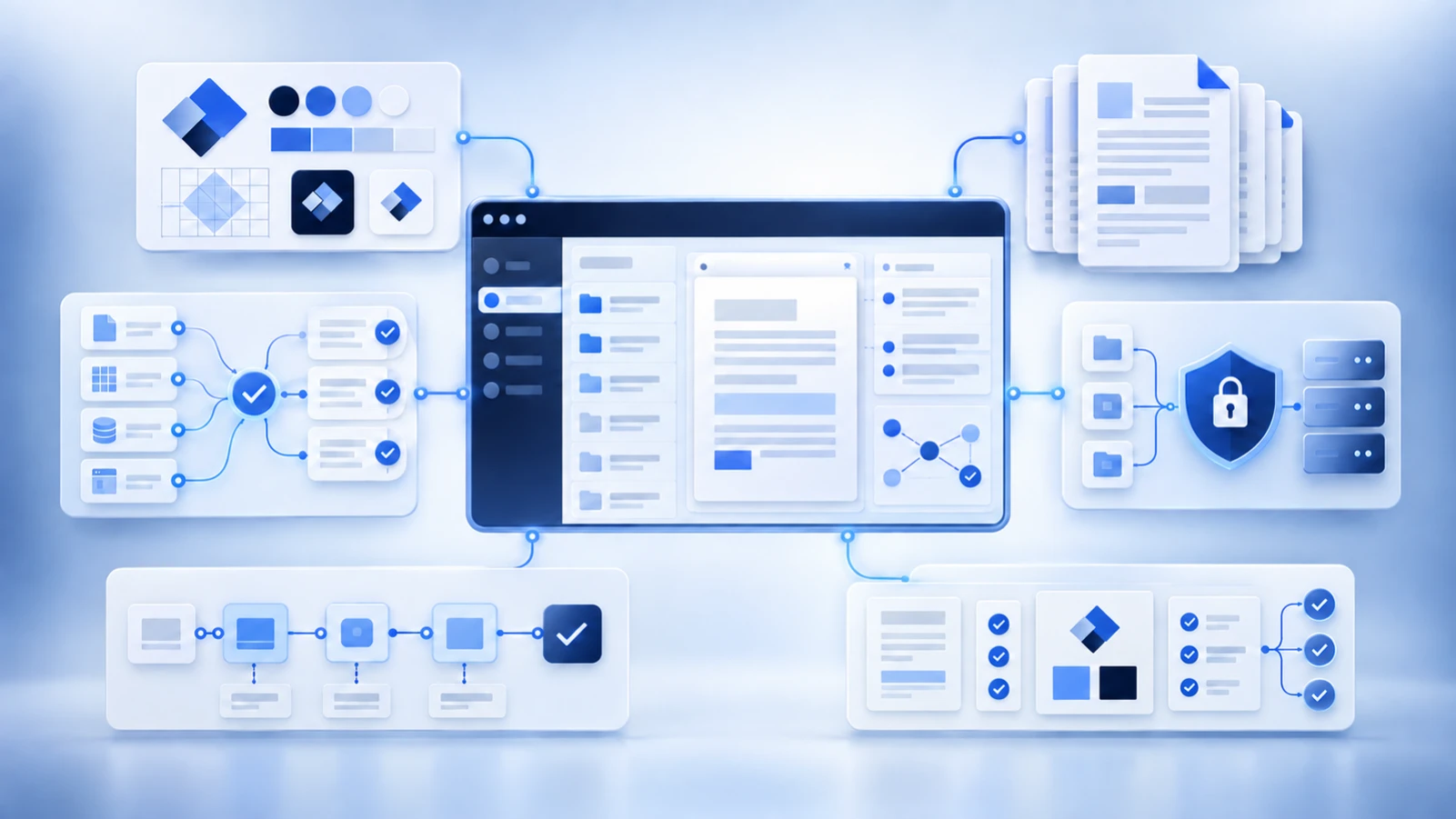
A legal tech startup should look innovative enough to signal a better way of working and credible enough to survive scrutiny from lawyers, IT, security and procurement. That balance does not come from adding navy blue, a courthouse icon and the word “AI” to a homepage. It comes from precise positioning, verifiable product proof, disciplined design and a website that answers risk questions before a sales call.
This guide explains how to build that brand for law firm buyers, whether the product supports legal research, document review, drafting, matter management, intake, knowledge management or another professional workflow.
Start with the buying reality, not a visual trend
Legal tech purchases are rarely evaluated by one person. A partner may care about legal quality and client service. An innovation leader may care about adoption. IT and security teams will examine access, data handling and integrations. Procurement will compare cost, terms and implementation risk. Daily users want the product to save time without forcing them to rebuild a familiar workflow.
Your brand has to hold together across those perspectives. If the message is designed only for an enthusiastic early user, it can fall apart when the buying group expands.
| Audience | Primary question | Brand evidence to provide |
|---|---|---|
| Partners and practice leaders | Will this improve legal work or client delivery? | Clear use cases, quality controls and relevant outcomes |
| Innovation and operations | Can teams adopt and scale it? | Workflow detail, implementation path and usage proof |
| IT and security | How is information handled? | Security documentation, architecture and controls |
| End users | Will this make my day easier? | Product screens, familiar workflows and practical demonstrations |
| Procurement | Is the value and deployment scope defensible? | Commercial clarity, support model and implementation facts |
1. Define the category before writing the tagline
Many legal tech homepages begin with a broad promise such as “transform legal work with AI.” It sounds ambitious, but it does not help a buyer place the product. Strong positioning answers five things in plain language:
- Who the product is for
- Which workflow or problem it addresses
- What the product does
- Why its method is meaningfully different
- What credible outcome the buyer should expect
Write a one-sentence category statement before exploring names, colors or campaign ideas. For example: “A contract review workspace for in-house legal teams that identifies negotiation issues against your playbook and keeps lawyers in control of every change.” It is not a slogan. It is the strategic sentence that keeps the rest of the brand honest.
If the product serves several use cases, choose the one that creates the clearest entry point. A focused lead message can still support a wider product story farther down the page.
2. Build a message hierarchy for a buying group
Your message hierarchy should move from recognition to proof. At the top of the page, help the right buyer recognize the problem and understand the product. Then show how it works, where it fits, why it can be trusted and what the next step involves.
A useful order is:
- Category and outcome: what the product is and the job it improves.
- Priority use cases: concrete workflows, not a cloud of features.
- Product mechanism: how information moves through the system and where people make decisions.
- Trust evidence: security, governance, expertise, customer proof and limitations.
- Adoption story: integration, onboarding, training and support.
- Commercial action: a demo, assessment or relevant product tour.
This hierarchy should appear consistently in sales decks, product pages, event materials and founder conversations. Brand consistency is not only visual. It is the repeated logic buyers use to understand the company.
3. Turn trust into visible information
“Trusted,” “secure” and “enterprise-ready” are claims, not evidence. A credible legal tech brand shows what those words mean. The exact proof depends on the product, but buyers commonly need clear answers about data use, retention, access, hosting, auditability, model behavior, integrations, human review and support.
Create a trust inventory with product, legal and security teams. Mark each statement as public, available under NDA or suitable for a sales conversation. Then design a path from the homepage to deeper evidence. A security or trust center, implementation page and detailed product documentation can do more for credibility than another row of abstract benefit cards.
If AI is part of the product, explain where it is used and where it is not. Show how outputs can be checked, what source material is visible and which actions require human approval. Do not imply certainty the system cannot deliver.
4. Choose an identity that signals precision without looking interchangeable
Legal tech design often falls into two extremes. One imitates a traditional law firm with crests, columns and dark blue gradients. The other imitates a general AI startup with neon light, floating orbs and vague futuristic language. Both can make the product harder to distinguish.
A stronger visual system begins with the brand's behavior. Should it feel analytical, calm, decisive, collaborative or rigorous? Translate those traits into typography, spacing, color, illustration, motion and product presentation.
- Typography: prioritize legibility and hierarchy across long pages, product UI and dense sales material.
- Color: create enough contrast for accessibility and enough range for product states, charts and diagrams.
- Motion: use it to explain workflow or causality, not to make the company appear innovative.
- Imagery: favor product reality, legal work and original diagrams over generic gavels, handshakes and robot imagery.
- System rules: document how the identity works in the website, interface, deck and events, not only in a logo file.
Our legal tech brand identity service is built around this connection between positioning, trust and a usable design system.
5. Make the product visible
A polished brand cannot compensate for hiding the product. Serious buyers want to see what users see, what goes in, what comes out and how decisions are controlled.
Use annotated screenshots, short workflow videos and diagrams that explain a real task. Remove or mask confidential information, but keep enough interface detail to be credible. If a feature is still conceptual, label it accurately instead of presenting a mockup as a shipped capability.
For each major use case, answer:
- What triggers the workflow?
- Which inputs are required?
- What does the system produce?
- Where does a lawyer review or intervene?
- What connects to the firm's existing tools?
- How is the result stored, shared or audited?
This approach also improves sales conversations. Prospects arrive with more informed questions instead of asking for a basic explanation of what the product does.
6. Design the website around evaluation, not applause
The legal tech website has to serve people at different levels of awareness. A referral may visit the homepage. A security reviewer may land directly on a trust page. A practice leader may search for a use case. A procurement stakeholder may look for implementation information after a demo.
At minimum, plan pages for the product, core use cases, relevant buyer or practice groups, security and trust, customer evidence, integrations, resources and contact. Keep navigation labels literal. The website should make evaluation easier, not turn it into a treasure hunt.
See our guide to legal tech website design for the page structure and conversion decisions behind the build. For an integrated brand and website engagement, explore how we work with legal tech startups.
7. Build proof before reaching for louder claims
Early-stage companies do not always have recognizable client logos or a large bank of case studies. That does not mean the website has to be empty. Use the proof you can substantiate:
- Named founder and subject-matter expertise
- Product architecture and workflow detail
- Pilot structure and implementation milestones
- Anonymized evidence with clear context and permission
- Security controls or completed assessments
- Specific integrations and technical documentation
- Customer quotes that describe a real change
Be precise about the status of every proof point. “Designed for” is not the same as “deployed by.” “Can integrate” is not the same as a live integration. Accuracy strengthens the brand because sophisticated buyers notice when language runs ahead of reality.
8. Give the brand an expert point of view
Publishing generic articles about “the future of legal AI” will not create much differentiation. Build content around questions that appear in real evaluation and adoption conversations. Explain how your team thinks about quality, change management, knowledge sources, workflow ownership and risk.
A useful content program has three layers:
- Problem education: explain the workflow and why current approaches fail.
- Evaluation guidance: help buyers compare methods, controls and implementation choices.
- Product evidence: show demonstrations, documentation, customer stories and release detail.
Clear entity signals also help search engines and AI answer systems understand the company. Keep naming, product descriptions, leadership information and external profiles consistent. Our SEO for legal tech companies service connects that information architecture with discoverability.
A practical 30-day legal tech branding sprint
| Week | Focus | Decisions |
|---|---|---|
| 1 | Research and buyer interviews | Audience, category, alternatives and buying concerns |
| 2 | Positioning and messaging | Category sentence, message hierarchy and proof gaps |
| 3 | Visual direction and system | Identity concept, typography, color, imagery and product treatment |
| 4 | High-value applications | Homepage direction, sales deck, demo assets and brand guidelines |
Thirty days can create a strong foundation, but it should not force unresolved strategy into premature design. If buyer access or product decisions are still moving, use the sprint to expose the questions and establish rules for testing them.
Common legal tech branding mistakes
Leading with AI instead of the legal job
Technology can be a differentiator, but buyers still need to know which task improves and how. Lead with the workflow and outcome, then explain the method.
Copying the visual codes of every competitor
Category familiarity helps, but resemblance is not credibility. Create distinct assets and a recognizable voice inside a system that remains usable and professional.
Treating security as a footer badge
Trust is part of product value. Give it an intentional place in the information architecture and sales story.
Promising transformation without an adoption path
Law firms do not buy a future state alone. Show how the product enters a team, integrates with the workflow and earns repeated use.
Build a brand that can survive the next question
The best legal tech brands do not merely look credible in a launch announcement. They make the product easier to understand, the claims easier to verify and the buying conversation easier to continue.
NexaFlow combines positioning, brand identity, website strategy and Webflow development for complex B2B and AI products. Talk to us if your legal tech company needs a brand that can communicate innovation without asking buyers to ignore risk.