%20(1).avif)



Who Develops Brand Identity for SaaS Companies?
Brand identity for a SaaS company gets developed by one of four types of providers: a full-service creative agency, a specialist SaaS branding agency, a freelance brand strategist, or an in-house design team. Which one is right depends on your stage, your budget, and whether you need your brand to work across every surface your business touches from day one.
That last part is where most SaaS brands quietly stall.
This guide covers who the real players are, what each type of provider actually delivers, what gets missed even when the brand looks good on paper, and how to choose the right fit for where your company is right now.
What "brand identity" actually means for a SaaS company
Brand identity is not a logo package.
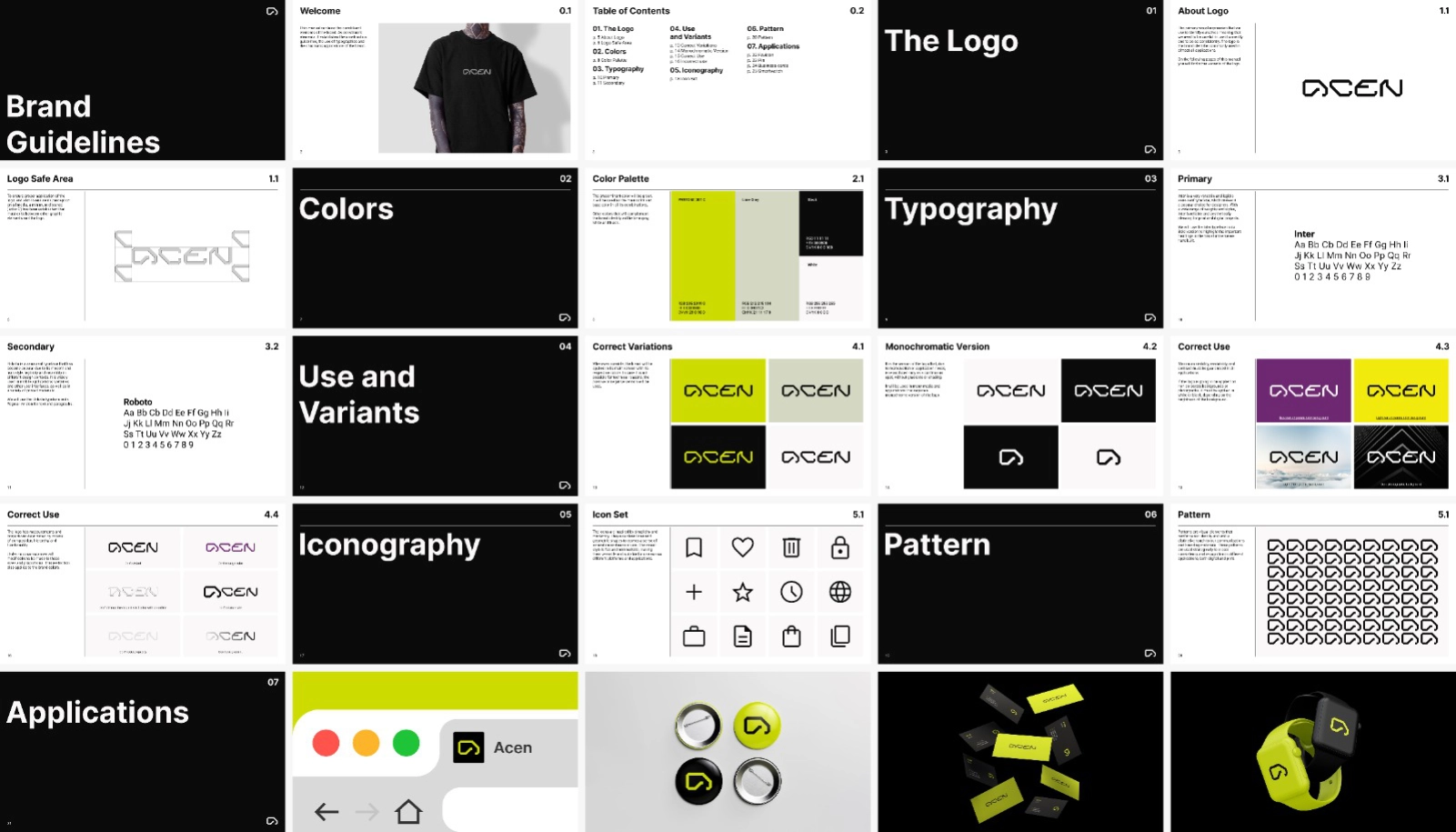
For a SaaS company, brand identity covers the full system your business uses to communicate who you are and what you do, visually and verbally. That includes your logo, colour palette, typography, iconography, illustration style, brand voice, messaging hierarchy, and positioning. Done properly, it also includes the rules for how all of those elements behave across your website, your product, your sales materials, your pitch deck, your ads, and every other surface your business shows up on.
That last part is what most identity deliverables skip. And it is the part that determines whether your brand actually works in the real world or just looks polished in a PDF.
There is a difference between a brand identity and a brand system. An identity tells you what your brand looks like. A system tells you how to use it across every surface, at every scale, without it falling apart. For SaaS companies that need their brand to work across a homepage, a pricing page, a CMS blog, a product UI, a fundraising deck, onboarding flows, social animations, and paid ads, you need the system, not just the identity.
The four types of providers who develop SaaS brand identity
1. Full-service creative agencies
A full-service agency covers everything your business puts out, in one engagement: brand strategy, visual identity, website design and build, pitch decks, motion design, digital ads, print, SEO, and ongoing creative support. One team, one point of contact, one price.
For most SaaS companies, this is the most practical model. The brand is not just designed in isolation. It gets built into every touchpoint simultaneously: the website, the investor deck, the social assets, the email templates, the product marketing pages. There is no handoff between vendors, no founder acting as the project manager, and no second or third engagement required before anything can go live.
The fragmentation problem in most SaaS creative setups is not just a branding agency versus a web developer. It is five or six separate vendors: a branding agency, a Webflow developer, a motion designer, a deck designer, an SEO agency, and a social creative. Each one needs briefing separately, none of them are aligned by default, and the founder ends up carrying the coordination burden across all of them.
Nexaflow replaces all of them. Brand identity, web design and development, deck design, motion, print, digital design, and SEO handled by one team under one fixed monthly price, starting at $2,000 per month. Onboarding takes 24 hours. Revisions are unlimited. You can pause or cancel the retainer at any time.
See Nexaflow's pricing and plans.
2. Specialist SaaS branding agencies
Specialist agencies focus exclusively on brand: strategy, positioning, visual identity, and guidelines. The output is usually polished and the strategic thinking is strong, particularly for companies with complex competitive positioning or multiple audience segments.
The limitations are real. A specialist branding agency does not build your website, your sales deck, your ad creative, your motion assets, or your onboarding UI. When the brand guidelines PDF lands, you still need to hire someone else to execute the brand across every surface it needs to appear on. That coordination cost, in time and money, is consistently underestimated. You are now managing multiple vendors instead of one, and you are the person responsible for making sure they stay aligned and that everything looks like it came from the same place.
Engagements typically run $35,000 to $180,000 and take three to six months. That investment can make sense at Series A and beyond when you have a dedicated internal team to manage execution. For most companies reading this article, it is not the right call yet.
3. Freelance brand strategists and designers
A strong freelance brand strategist can produce positioning, messaging, and visual identity work that competes with agency output, often at a fraction of the cost. Platforms like Contra, Toptal, and Dribbble's freelancer directory surface experienced SaaS-focused designers.
The coordination problem here is worse than with a specialist agency. To get from a finished brand to a live website, a launched deck, a motion asset, and a set of ad creatives, you are managing four or five separate freelancers with no single point of accountability across any of them. When something needs changing across multiple deliverables, you are the one chasing it. Freelance engagements typically run $4,000 to $18,000 for brand identity alone, before any execution costs.
4. In-house design teams
In-house brand development only makes sense at scale. You need enough design maturity to lead the process, clear internal alignment on positioning, and the budget to hire senior people across multiple disciplines rather than assembling a junior team reactively.
For earlier-stage companies, in-house brand work frequently ends up inconsistent because it was built one asset at a time rather than as a system. And the cost of building that internal capacity across the disciplines a SaaS company actually needs, brand designer, Webflow developer, motion designer, SEO manager, presentation designer, runs to $330,000 per year in salaries alone, before benefits, tooling, and management time. Nexaflow's Dominate plan covers all of those disciplines for $6,800 per month, $81,600 per year: a saving of up to $248,400 compared with building the equivalent team in-house.
See Nexaflow's pricing and plans.
Why your stage changes who you should hire
The right answer to "who develops my brand identity" is not the same at pre-seed as it is at Series B. But the model that works at every stage is one team covering every touchpoint, at a price that does not require a funding round to justify.
Pre-product-market fit: You need a clear, credible brand foundation fast: strong enough to support fundraising conversations and a launch website, without locking up capital you need for product. Nexaflow's one-off brand identity starts at $2,500 and is scoped to include everything you need to go live across your first set of touchpoints, no second vendor required.
Post-PMF, pre-Series A: This is where brand investment starts paying off materially. You have validated what your product does and who it is for. Now you need a brand that can scale across a website, a sales deck, a product onboarding flow, paid acquisition campaigns, and investor materials simultaneously. A retainer at $2,000 to $4,000 per month gives you a full creative team across every one of those surfaces, for less than the cost of a single month of a specialist branding agency engagement.
Series A and beyond: The surfaces multiply. Investor decks, case studies, product marketing pages, campaign assets, event collateral, localised landing pages, motion content. The retainer model scales with that directly. One team, every touchpoint, no re-briefing a new vendor every time a new asset is needed. At $6,800 per month on the Dominate plan, the annual cost is $81,600: a fraction of what a specialist agency charges for brand strategy alone, and the output is not a guidelines PDF but everything executed, live, and consistent.
Getting this wrong in either direction is expensive. Over-investing in brand through the wrong model too early diverts capital you need for product. Under-investing at growth stage by spreading work across disconnected vendors means inconsistency compounds over time.
If you are not sure where to start, the contact form at the bottom of this page is the right next step. We will tell you straight.
What to look for in a SaaS branding partner
Not every agency that has worked with a SaaS company is equipped to handle SaaS brand identity. Here is what separates a partner who will move your business forward from one who will produce work that looks good in a case study:
They ask about your product before they talk about design. A branding agency that leads with aesthetic direction before understanding what your software does and who buys it is optimising for portfolio work, not for your results.
They can show you how the brand performs in context. Mockups in a PDF are not evidence. Ask to see how their work has been applied to live websites, pitch decks, campaign assets, and product marketing pages for SaaS clients. If the case study stops at the brand guidelines document, that is a gap worth questioning.
They understand the difference between brand positioning and brand identity. Positioning is the strategic work of deciding where your company sits in the market and what it stands for relative to competitors. Identity is the visual and verbal execution of that position. An agency that conflates them, or skips positioning entirely, is building aesthetics without a foundation.
They scope the deliverables specifically. Vague deliverables lead to vague results. A good agency can tell you exactly what you will receive, in what formats, at what specifications, and what those files are designed to be used for. Every Nexaflow engagement comes with a clear scope before work starts, so you know exactly what you are getting and when.
They cover execution across every surface, not just the brand document. For SaaS, your brand needs to work on your website, your deck, your ads, your social content, your motion assets, and your product marketing pages. If the agency building your identity has no view on how it will perform across those surfaces, you are setting yourself up for an expensive gap between brand delivery and real-world execution.
If you want a second opinion on a branding proposal you have already received, we are happy to look at it. Use the contact form below.
The gap nobody talks about: from brand identity to live execution
This is where SaaS brand projects quietly fail, and it is almost never discussed in the agency content that ranks on this topic.
A branding agency delivers a finished brand identity: logo in multiple formats, a defined colour palette, typography choices, brand guidelines, and often a Figma file showing how these elements look applied to sample pages. It looks good. The presentation is polished. You sign off.
Then execution starts, and the gaps appear.
We went through this with a SaaS client who arrived with a complete brand already in place: logo, colours, typography, messaging, and a clear visual direction. On paper it was solid. But the moment we moved into building out their full creative suite, the same problems appeared that come up repeatedly in this kind of handoff.
The typography worked well in static mockups. In live CMS-driven pages, across mobile breakpoints and longer content sections, some of those choices created readability problems that required adjustment. The colour combinations that read cleanly in the brand deck did not provide enough contrast for buttons, forms, and conversion-critical elements, a real accessibility issue and a practical problem for anyone trying to get visitors to actually click things. The messaging had been written to communicate brand positioning, not to explain the product fast enough for a homepage visitor with limited patience.
Most significantly, the brand had not been translated into a working system. There were no specifications for how it should behave across a Webflow build, a pitch deck, a set of social templates, or a motion asset. Each new execution required the team to make judgment calls that a proper brand system would have answered upfront. The result was inconsistency that accumulated over time, visible across surfaces to anyone paying attention.
Before anything could go live properly, we had to do work that should have been scoped from the beginning: refine the type system, adapt the colour usage for accessibility and conversion clarity, restructure the messaging for product explanation, and establish the rules for how the brand would behave across every surface it needed to appear on.
This is not a criticism of branding agencies. Brand identity and full creative execution are genuinely different disciplines. But if you are a SaaS company, you need both, and they need to be connected from the start. When Nexaflow handles it, brand strategy and execution across every touchpoint are developed together, which means the gaps above do not exist because there is no handoff to get wrong.
What a SaaS branding brief should include
Most SaaS companies arrive at a branding engagement without a proper brief, which means the first two weeks of any project get spent extracting information that should have been prepared in advance. A strong brief covers:
- Business context: Stage, funding status, ARR if relevant, key markets
- Product description: What the software does, for whom, and what problem it solves, in plain language rather than marketing copy
- Target audience: Primary buyer, secondary users, their technical sophistication, and what they evaluate when choosing software
- Competitive landscape: Three to five direct competitors, what their brands look and feel like, and where you want to sit relative to them
- Current brand status: What exists already and what is or is not working
- Deliverables required: Every surface the brand needs to work across, not just the logo and guidelines
- Distribution channels: Website, product UI, paid ads, sales collateral, pitch decks, social, events
- Timeline and budget: Be specific. Agencies price more accurately and scope more usefully when they have real numbers to work with
A brief that covers these points takes an afternoon to write and saves weeks of back-and-forth. It also filters out agencies that are not the right fit quickly.
What does SaaS brand identity development actually cost?
The honest version of this answer depends on what you are actually buying.
If you are buying a brand guidelines PDF and a logo suite from a specialist agency, you are looking at $35,000 to $180,000, and that is before a single live asset has been produced.
If you are buying a brand system that works across your website, your deck, your ads, your motion content, and your ongoing marketing, the comparison changes. Here is what building that capability in-house would cost you:
Nexaflow's Dominate plan, which covers all of those disciplines, costs $81,600 per year. That is a saving of up to $248,400 compared with building the equivalent team in-house, and it includes unlimited revisions, a dedicated account manager, weekly strategy calls, and no minimum commitment.
For companies not ready for a retainer, one-off projects start at $2,500 for brand identity, $5,000 for a full website build, and $1,800 for a deck.
View Nexaflow's plans and one-off project pricing.