%20(1).avif)



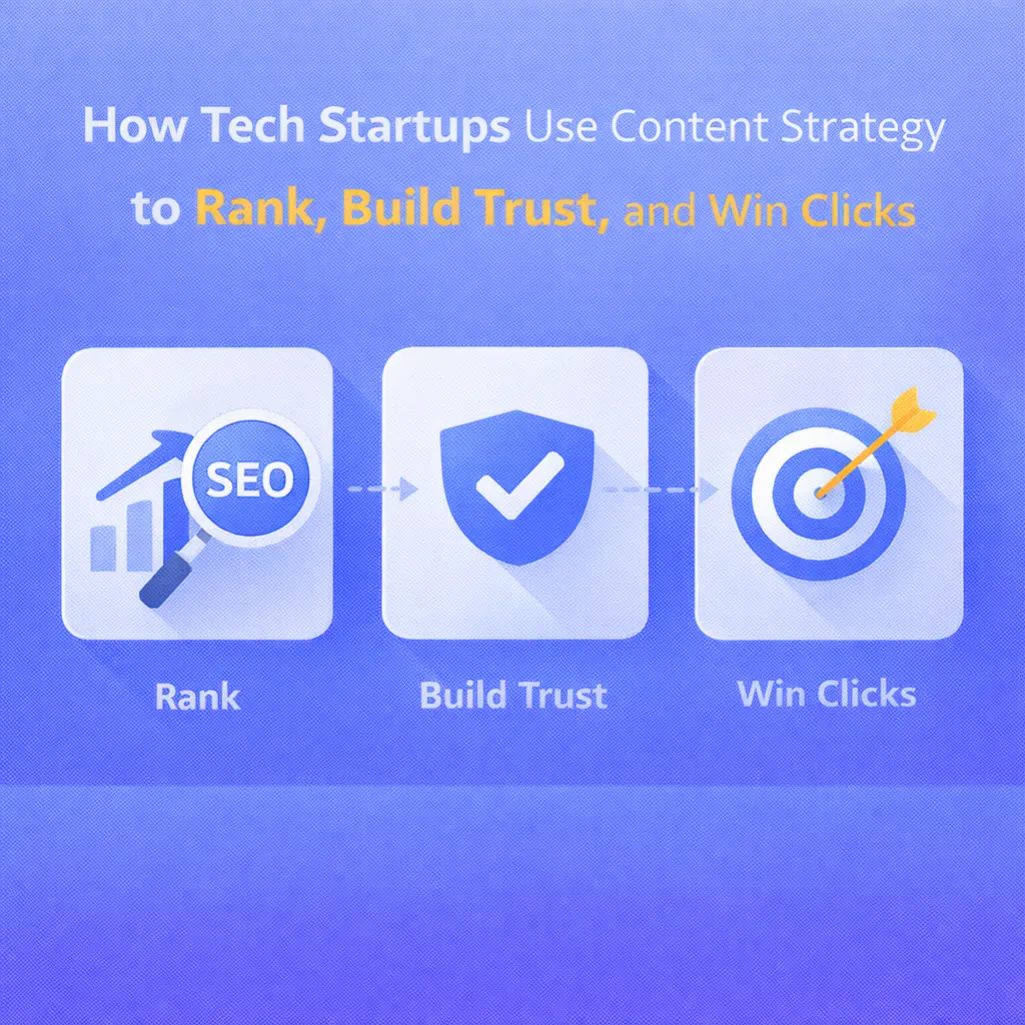
If you run a tech startup and organic traffic feels slow, random, or pointless, you’re not alone.
Most startups publish blog posts because they feel like they should. A few “how-to” articles. A couple of trend pieces. Maybe something the intern wrote. Six months later, traffic is flat and none of it turns into pipeline.
That’s usually when founders start asking a better question:
What do content strategy agencies actually do that makes organic traffic grow?
This article breaks that down clearly, without buzzwords, and without pretending content is magic.
First, the real problem with most startup content
Before we talk about agencies, let’s be honest about why content usually fails for tech startups.
It’s not because blogging “doesn’t work”.
It’s because most content is written with no strategy behind it.
Common problems we see:
- Topics picked because they sound sensible, not because people search for them
- Content written for “everyone”, which means it resonates with no one
- Articles that get traffic but never help a buyer make a decision
- SEO done mechanically, keywords dropped in, value missing
- No connection between blog content and the product or service being sold
Publishing more of this does not fix the problem. It just creates more pages nobody cares about.
What a content strategy agency actually does differently
A good content strategy agency doesn’t start by writing.
They start by deciding what not to write.
Their job is not to fill a blog. Their job is to make organic traffic useful.
Here’s how that works in practice.
1. They define who the traffic is for (properly)
Most startups say their audience is “founders”, “teams”, or “businesses”.
That’s too vague to be useful.
A content strategy agency forces clarity:
- Who is searching?
- What role are they in?
- What problem are they trying to solve right now?
- What decision are they moving towards?
For a tech startup, that often means separating:
- Curious learners from serious buyers
- Early-stage researchers from comparison shoppers
- Technical users from budget holders
Once this is clear, content stops being generic and starts feeling relevant.
2. They pick topics based on intent, not volume
One of the biggest mistakes startups make is chasing big search numbers.
High-volume keywords look attractive but usually bring:
- Students
- Job seekers
- Competitors
- People who are years away from buying anything
Content strategy agencies focus on search intent instead.
That means targeting queries where someone is:
- Evaluating options
- Trying to solve a specific problem
- Looking for frameworks, tools, or approaches
- Comparing solutions
The traffic is smaller, but it’s the right traffic. This is where organic growth actually compounds.
3. They structure content the way Google expects
Google doesn’t rank pages randomly.
For “how” searches like this one, it consistently rewards content that:
- Follows a logical step-by-step structure
- Uses clear headings
- Answers related questions on the same page
- Stays focused on one core topic
A content strategy agency studies the pages already ranking and identifies:
- What they all have in common
- What sections are missing
- Where explanations are weak or vague
The goal isn’t to copy competitors. It’s to outperform them by being clearer and more complete.
4. They write for humans first, search engines second
Most startup blogs fail because they sound like marketing copy.
Good agencies avoid:
- Buzzwords
- Over-promising
- Fake authority
- Empty phrases like “drive synergy” or “unlock growth”
Instead, they write:
- In plain English
- With short paragraphs
- Using examples founders actually recognise
- Explaining complex ideas simply
Google increasingly rewards content that people actually read. Time on page, scrolling, and engagement matter more than clever keyword tricks.
5. They connect content to real business outcomes
This is the part most agencies and in-house teams miss.
Traffic alone does not matter.
A content strategy agency maps content to:
- Awareness content that builds trust
- Consideration content that helps compare options
- Decision content that reduces risk and hesitation
That’s how blogs start supporting:
- Sales conversations
- Founder credibility
- Hiring
- Partnerships
- Investor research
Even when a post is informational, it should naturally lead the reader to think:
“This company understands my problem.”
6. They build authority over time, not overnight
Organic traffic growth for tech startups is a long game.
Good agencies plan:
- Topic clusters instead of one-off posts
- Internal linking that builds relevance
- Updates to existing content, not just new posts
- Consistent publishing that compounds
This is how Google starts to trust a site.
Not with one viral article, but with sustained quality and focus.
What most content strategy agencies get wrong
Not all agencies are good. Many still fail tech startups.
Red flags to watch for:
- Promising traffic numbers without discussing intent
- Focusing only on keywords, not users
- Writing content that could fit any company
- No understanding of technical or B2B buying cycles
- Overuse of templates and recycled ideas
If an agency can’t explain why a topic matters to your business, they’re guessing.
When hiring a content strategy agency actually makes sense
A content strategy agency is worth it if:
- You already have a product worth explaining
- Paid channels are expensive or inconsistent
- Your sales cycle requires trust and education
- You want traffic that supports growth, not vanity metrics
It’s usually a bad idea if:
- You’re looking for quick wins
- You just want “more blogs”
- You don’t know who your buyer is yet
Final thought
Content strategy agencies don’t grow organic traffic by publishing more.
They grow it by publishing less, but better.
Better topics.
Better structure.
Better intent.
Better writing.
If you’re tired of blogs that get views but go nowhere, the fix isn’t another article. It’s a clearer strategy behind every article you publish.
Thinking about your own content strategy?
If you’re running a tech startup and want organic traffic that actually supports growth, not noise, there’s usually a handful of changes that make the biggest difference.
At NexaFlow, we help tech and SaaS teams:
- Identify which content is worth publishing
- Fix underperforming blogs
- Build strategies that attract the right readers, not everyone
If this article felt familiar, the contact form below is there for a reason.
Fill it out. We’ll take a look and tell you honestly what’s worth fixing and what’s not.