%20(1).avif)



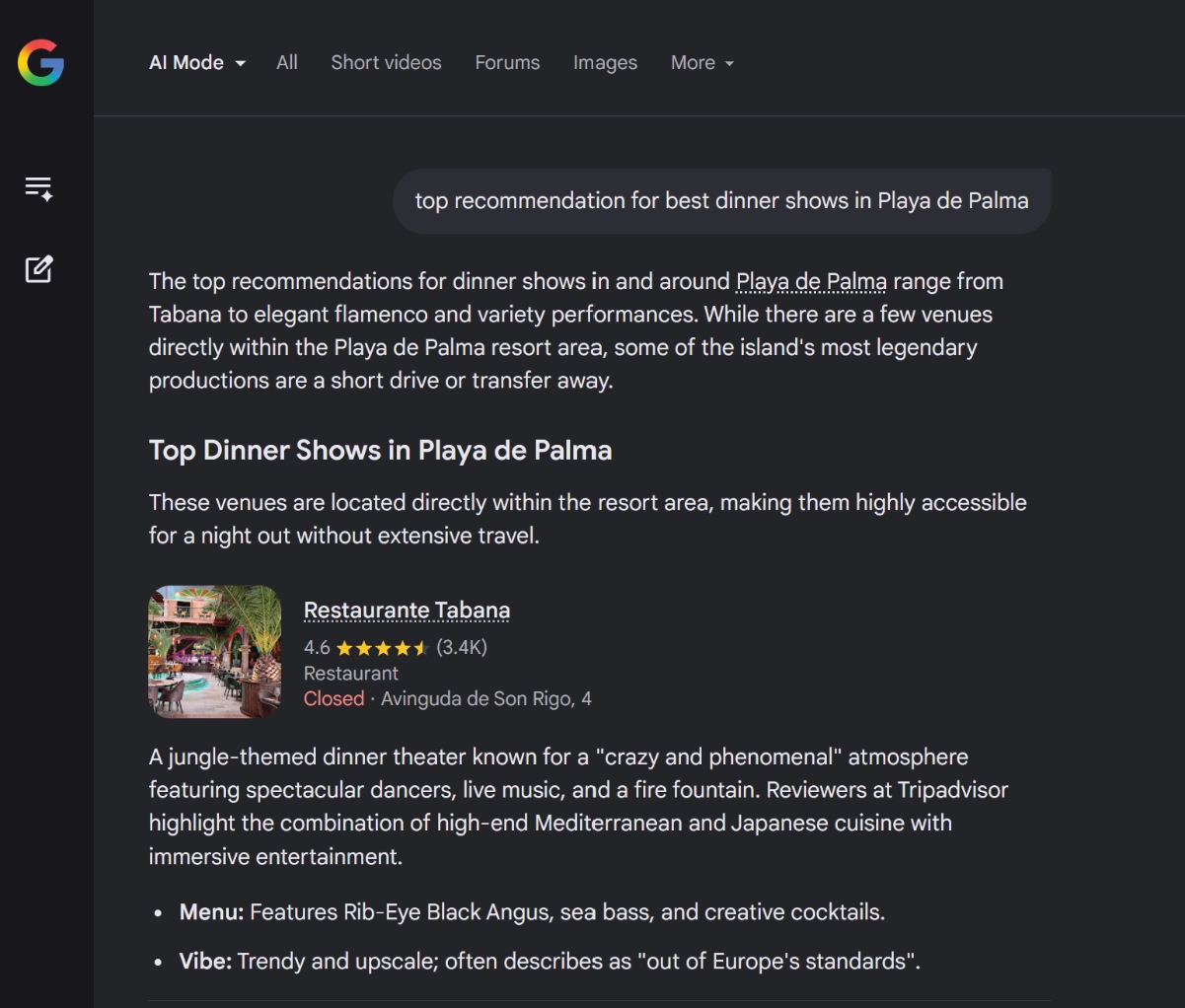
Answer Engine Optimization, or AEO, is the practice of making your brand and content easier for AI-powered search tools to understand, trust, and reference when answering a user’s question.
That includes platforms such as ChatGPT, Perplexity, Google AI Overviews, Google AI Mode, Microsoft Copilot, Gemini, and voice assistants.
Traditional SEO was largely about earning visibility in a list of search results. AEO is about earning visibility inside the answer itself.
That does not mean SEO is dead. It means the way people research is changing.
A buyer might still search Google, click through websites, compare options, and book a call. But they may now start by asking:
- “What is the best SEO strategy for an AI company?”
- “Which Webflow agencies work with SaaS startups?”
- “How can a fintech company improve visibility in ChatGPT?”
- “What should a B2B SaaS company do to appear in Google AI Overviews?”
The AI platform then pulls together an answer from sources it considers relevant and trustworthy. Your brand is either part of that answer or it is invisible at a moment when the buyer is actively researching.
That is where Answer Engine Optimization matters.
What Is Answer Engine Optimization?
Answer Engine Optimization is the work of improving how often, how accurately, and how usefully your brand appears in AI-generated answers.
It combines several things:
- Creating clear content that directly answers real buyer questions
- Building topical authority around the problems your customers care about
- Making important information easy to crawl, understand, and verify
- Strengthening trust signals on your site and across the wider web
- Tracking how AI platforms describe, compare, and cite your brand
The goal is not to stuff pages with phrases like “best AI SEO agency” and hope ChatGPT notices.
The goal is to become a credible source that answer engines can use when someone asks a relevant question.
That distinction matters.
AI systems are not looking for the page that repeats a keyword most often. They are trying to assemble a useful answer from information they can retrieve, interpret, and support. Brands that publish generic, recycled content have very little to offer in that process.
What Are Answer Engines?
Answer engines are tools that give users a synthesized response instead of simply presenting a list of links.
Examples include:
- ChatGPT Search
- Perplexity
- Google AI Overviews
- Google AI Mode
- Microsoft Copilot
- Gemini
- Claude
- Voice assistants such as Siri and Alexa
A traditional search engine gives you a set of pages to review.
An answer engine does more of the research work for you. It may break one broad question into several related searches, assess different sources, compare information, and then write a response with supporting links or citations.
This is useful for users because it reduces the effort required to understand a topic. It is more complicated for brands because being in position one in Google does not automatically mean you will be mentioned in an AI-generated answer.
A company can rank well organically and still be absent from ChatGPT, Perplexity, or Google AI Mode results. Equally, a brand with a smaller website can appear when it has strong proof, a clear point of view, or trusted third-party validation.
Why Does Answer Engine Optimization Matter?
AEO matters because the research journey is becoming less linear.
People are no longer limited to typing short keywords into Google and clicking through ten blue links. They can ask detailed questions in normal language, request a comparison, challenge the first answer, and keep narrowing their options in one conversation.
That changes what visibility looks like.
Your Buyer May Make Their First Shortlist Before Visiting a Website
Imagine someone asks an AI platform:
“Which agencies can help a B2B SaaS company improve SEO and visibility in AI search?”
If your business is not included, you may never reach the consideration set.
The user might not know your brand exists. They may not search for you directly. They may simply follow the shortlist presented by the AI answer.
This is why AEO is not just about traffic. It is about being present when the market is forming an opinion about you.
People Want Direct Answers, Not More Research Work
Search behavior has been moving toward faster answers for years through featured snippets, People Also Ask results, product comparisons, local packs, and knowledge panels.
AI search pushes that further.
Instead of finding five articles titled “What Is Answer Engine Optimization?” and reading each one, a user can ask for a definition, practical steps, examples, tools, risks, and agency recommendations in one thread.
That does not remove the need for websites. It raises the bar for what a website needs to provide.
A vague service page will not help much. A useful, specific resource that answers the question properly has a far better chance of being discovered and referenced.
Brand Visibility Can Happen Before the Click
Not every AI mention produces immediate referral traffic.
Sometimes the user reads the answer, remembers your company name, and searches for you later. Sometimes they click a cited link. Sometimes they ask the platform to compare you against a competitor before visiting either website.
That means AEO should not be judged only by immediate clicks.
You should also look at:
- Brand mentions in AI answers
- Citation frequency for commercially relevant questions
- Branded search growth
- Referral traffic from AI platforms
- Assisted conversions
- Sales conversations where prospects already understand your offer
- Whether AI platforms describe your company accurately
AEO is partly a visibility strategy and partly a reputation strategy.
It Forces Better Content
Most weak content exists because it was created to satisfy a keyword tool, not a real person.
It gives broad definitions, copies competitor headings, repeats the same points, and adds no experience or useful detail. That content was already struggling before AI search became mainstream.
Answer engines make the problem more obvious.
If your content does not answer the question clearly, add useful evidence, explain trade-offs, or offer a distinct point of view, there is little reason for an AI system to surface it over ten similar pages.
Good AEO work pushes companies to publish content that is actually worth referencing.
AEO vs SEO: What Is the Difference?
| Traditional SEO | Answer Engine Optimization |
|---|---|
| Focuses on visibility in search results | Focuses on visibility within AI-generated answers |
| Often measures rankings, impressions, clicks, and conversions | Also measures mentions, citations, answer share, sentiment, and AI referrals |
| Targets keywords and search intent | Targets natural-language questions, comparison prompts, and research journeys |
| Competes for positions in a results page | Competes to become part of the answer or recommendation |
| Relies on technical health, useful content, authority, and links | Relies on those same foundations, plus clear answers, entity consistency, trusted proof, and wider web presence |
The important point is this:
AEO does not replace SEO. It builds on it.
You still need a technically sound website. Your pages still need to be indexable. You still need internal links, useful content, credible backlinks, good UX, clear service pages, and a site that converts once someone arrives.
Anyone selling AEO as a shortcut around SEO is selling nonsense.
How Does Answer Engine Optimization Work?
There is no guaranteed formula that forces ChatGPT, Perplexity, or Google AI Overviews to cite your site.
The platforms use different systems, outputs vary, and their source selection can change over time.
But the brands that consistently appear tend to make it easy for answer engines to find, understand, trust, and use their information.
Here is what that work looks like in practice.
1. Start With Real Questions, Not Just Keywords
Traditional keyword research still matters. But AEO research needs to go deeper.
You need to understand the questions prospects ask before they are ready to buy, while they are comparing options, and when they are trying to justify a decision internally.
For example, a SaaS company might target questions such as:
- What is the best way to reduce churn in B2B SaaS?
- How do SaaS startups improve product adoption?
- What should a SaaS startup include on its website?
- What is the difference between SEO and AEO for SaaS companies?
- Which SEO strategies work for B2B SaaS companies in 2026?
A fintech company might need content around:
- How do fintech brands build trust online?
- What should a fintech website include?
- How can financial services companies improve AI search visibility?
- What do customers look for before choosing a financial platform?
The source material should not only come from keyword tools.
Look at:
- Sales-call recordings
- Discovery-call notes
- Customer support tickets
- Live chat transcripts
- Product reviews
- Competitor reviews
- Reddit threads
- Industry forums
- LinkedIn comments
- Questions prospects ask during demos
- The language customers use when explaining their problem
Those sources reveal the phrasing, uncertainty, and objections that generic keyword research often misses.
2. Answer the Main Question Immediately
AEO content should not make readers scroll through 500 words of filler before getting an answer.
Lead with a direct explanation.
For example:
Answer Engine Optimization is the process of improving how often and how accurately your brand is surfaced in AI-generated answers across platforms such as ChatGPT, Perplexity, Google AI Overviews, and Copilot.
That gives the user a usable answer straight away.
Then you can explain the detail, show examples, cover objections, and help them decide what to do next.
This does not mean every page needs to be short. It means the first few lines of each relevant section should do real work.
A good structure usually looks like this:
- Ask a clear question in the heading.
- Give a direct answer in the first paragraph.
- Add supporting detail, examples, evidence, or steps.
- Link to the next relevant page in the journey.
That structure helps human readers scan the page, and it gives machines a clearer understanding of the topic.
3. Publish Information That Cannot Be Found Everywhere Else
This is where most businesses fail.
They publish a generic guide based on the same five articles their competitors used. Then they wonder why nobody cites it.
If your article could have been written by any agency, it probably will not become a preferred source.
Useful content includes things such as:
- First-hand experience from client work
- Original research
- Survey data
- Internal benchmarks
- Screenshots or examples from real projects
- Industry-specific frameworks
- Customer stories
- Expert analysis
- Honest comparisons
- Specific lessons from failed approaches
- Clear answers to questions competitors avoid
For example, an article titled “How to Rank in AI Search” is not automatically useful.
An article titled “What We Changed on 12 SaaS Websites to Make Their Service Pages Easier for AI Search Tools to Understand” is far harder to copy because it contains specific experience.
AI platforms have plenty of generic summaries to choose from. What they need are sources with something worth summarizing.
4. Build Topical Authority, Not Random Blog Posts
One blog post rarely changes how a brand is understood.
If you want Nexaflow to be associated with AI SEO, the site needs a connected body of work around that topic.
That could include pages covering:
- What AI SEO services are
- What Answer Engine Optimization is
- How Google AI Overviews work
- How to improve visibility in AI search engines
- AI SEO for SaaS companies
- AI SEO for fintech companies
- AI SEO for healthcare brands
- AI SEO for AI companies
- How to measure AI search visibility
- How to create content that AI systems can reference
- How brand mentions affect AI search results
Each page should answer a distinct question, but they should reinforce the same broader subject.
This is how you build a credible topical footprint rather than a collection of disconnected articles.
For this article, link naturally to:
- AI SEO services
- What Are AI SEO Services and How Do They Work?
- How to Get Your Business Into Google AI Overviews
- How to Improve Brand Visibility in AI Search Engines
- SEO for AI Companies
- SEO for SaaS Startups
5. Make Your Website Easy to Crawl and Understand
There is no secret AEO code file that makes AI platforms cite you.
Your technical foundation still matters because content cannot be surfaced reliably if it is blocked, broken, hidden behind poor rendering, duplicated across dozens of URLs, or hard to understand.
Focus on the basics:
- Make important pages crawlable and indexable
- Use a logical heading structure
- Keep important information in visible text, not only inside images or animations
- Use clear page titles and descriptions
- Build relevant internal links
- Avoid duplicate or thin pages
- Make sure your website works properly on mobile
- Improve page speed and overall user experience
- Use structured data where it accurately reflects visible page content
- Keep brand details consistent across your website and key profiles
Structured data is useful, but it is not a cheat code.
Schema can help search engines understand elements such as your organization, articles, services, products, FAQs, reviews, and locations. But adding every schema type you can find will not force inclusion in AI answers.
Use it to make your site more accurate and easier to interpret, not to game the system.
6. Build Trust Beyond Your Own Website
AI platforms do not only look at your homepage and blog.
They can pull context from across the web. That means your wider brand presence matters.
A strong AEO strategy should consider whether your company is consistently represented across:
- Google Business Profile
- YouTube
- Industry directories
- Review platforms
- Trusted media coverage
- Podcasts
- Expert roundups
- Partner websites
- Guest articles
- Relevant communities and forums
- Third-party comparison sites
The aim is not to manufacture fake mentions or buy rubbish backlinks.
The aim is to make sure credible sources consistently support the same facts about your business:
- What you do
- Who you serve
- What makes you different
- The problems you solve
- Your team’s experience
- The results you have delivered
- Whether customers trust you
When your website says one thing, your LinkedIn says another, your directory listings are out of date, and no independent source can confirm your claims, it is harder for anyone, human or AI, to trust the picture.
7. Create Content for the Full Buying Journey
Question-based content can build visibility, but top-of-funnel articles alone will not create a pipeline.
Someone who searches “what is AEO?” may be months away from hiring an agency.
Your content needs to support the next questions too.
A sensible journey might include:
| Buyer stage | Content needed |
|---|---|
| Learning | What Is Answer Engine Optimization? |
| Understanding the problem | Why Is My Company Missing From ChatGPT Answers? |
| Comparing approaches | AEO vs SEO: What Is the Difference? |
| Evaluating providers | What Should an AI SEO Agency Actually Deliver? |
| Making a decision | AI SEO Services for SaaS Companies |
| Reducing risk | AI SEO case studies, process pages, reviews, FAQs, and pricing guidance |
This is where AEO becomes useful commercially.
You are not trying to win one answer and hope for the best. You are creating a clear path from first question to informed decision.
How Do You Measure AEO Success?
You cannot manage AEO properly by checking one ChatGPT prompt once a month and celebrating when your name appears.
Results can vary. Prompts can be worded differently. Platforms can change their source choices. One mention does not prove a strategy is working.
Measure it systematically.
For a practical evidence sheet and reporting cadence, use our Google AI Overview tracking guide. For the broader improvement process, read how to improve brand visibility in AI search engines.
Track Your Most Important Questions
Build a list of prompts that match real buyer intent.
For Nexaflow, that may include:
- Best AI SEO agencies for SaaS companies
- How can an AI company improve visibility in ChatGPT?
- What is the best SEO strategy for a fintech startup?
- How do B2B SaaS companies appear in Google AI Overviews?
- Which Webflow agencies specialize in SaaS startups?
- What should a SaaS startup website include?
Check how each platform answers those questions over time.
You are looking for:
- Whether your company is mentioned
- Whether your company is cited or linked
- How accurately the platform describes your business
- Which competitors appear
- Which third-party sources influence the answer
- What content gap may be stopping you from appearing
Track AI Referral Traffic and Conversions
Use analytics to understand whether visitors are arriving from AI platforms and what they do next.
Track:
- Sessions from ChatGPT, Perplexity, Copilot, Gemini, and other platforms where available
- Landing pages receiving AI referrals
- Time on page
- Engaged sessions
- Form submissions
- Demo bookings
- Contact enquiries
- Assisted conversions
Do not assume every AI mention will create a click. But when referrals do happen, you need to know whether those users are commercially useful.
Track Brand Search and Pipeline Signals
AEO can influence people before they visit.
Watch for:
- Growth in branded searches
- More direct traffic
- More prospects who mention AI tools during sales calls
- More enquiries that arrive with a clearer understanding of your offer
- More accurate third-party descriptions of your business
- Higher conversion rates on relevant service pages
The right measurement framework connects visibility to commercial outcomes.
Common AEO Mistakes to Avoid
Publishing Dozens of Thin Question Pages
Creating a separate 300-word page for every possible variation of a question is not a strategy.
It creates a thin, repetitive site and gives users little reason to trust you. Cover related questions properly inside strong pages, then create separate resources only where the topic deserves its own depth.
Treating AI-Generated Content as a Content Strategy
AI can help with research, outlines, editing, and operational work.
But publishing mass-produced content with no experience, no evidence, no point of view, and no editorial quality is a fast way to make your site forgettable.
The content needs human judgment and information that does not already exist everywhere else.
Writing for Machines Instead of People
Do not fill your page with awkward phrases designed to sound “AI friendly.”
Clear writing is AI friendly because clear writing is human friendly.
Use direct language. Explain terms. Organize pages well. Give examples. Remove fluff.
That is enough.
Chasing AEO Hacks
There is no special file, schema type, prompt trick, or keyword-density formula that guarantees AI visibility.
Be cautious of agencies claiming they can get your company “ranked in ChatGPT” within a fixed period. AI responses are not a traditional ranking position, and no agency controls the source selection of every platform.
The work is less glamorous than the sales pitch:
- Better content
- Better evidence
- Better technical foundations
- Better brand consistency
- Better third-party proof
- Better measurement
That is what holds up over time.
Does Every Business Need Answer Engine Optimization?
Not every company needs a large AEO program immediately.
But most businesses should at least make sure they are not invisible in the places buyers now use for research.
AEO matters most for companies with longer consideration cycles, complex offers, competitive markets, or buyers who need to compare options before making a decision.
That includes:
- B2B SaaS companies
- AI companies
- Fintech businesses
- Cybersecurity providers
- Healthcare and healthtech companies
- Professional service firms
- Consultancies
- Managed service providers
- Recruitment firms
- Property and investment businesses
- High-ticket ecommerce brands
If customers ask detailed questions before they buy, answer engines are already part of the journey.
The Bottom Line
Answer Engine Optimization is not about tricking AI platforms into mentioning your business.
It is about making your company easier to understand, easier to trust, and more useful to cite when people ask questions that matter to your market.
The best AEO strategy looks a lot like a mature SEO and brand strategy:
- Understand what buyers are trying to solve
- Publish direct, useful answers
- Add original experience and proof
- Build authority around your subject
- Make your website technically sound
- Keep your brand information consistent across the web
- Measure visibility against real commercial questions
- Improve based on what you learn
SEO is still the foundation.
AEO is the next layer: making sure your brand remains visible when search stops being a list of links and starts becoming a conversation.
Need Help With AI SEO and AEO?
Nexaflow helps SaaS companies, AI businesses, fintech brands, and professional service firms improve how they are found across Google, AI search tools, and answer engines.
Our approach combines technical SEO, content strategy, brand messaging, on-page optimization, and AI-search visibility work so your website does more than look good. It helps the right buyers find and understand your business.
Explore our AI SEO services or get in touch to discuss where your company is currently missing from the conversation.