%20(1).avif)



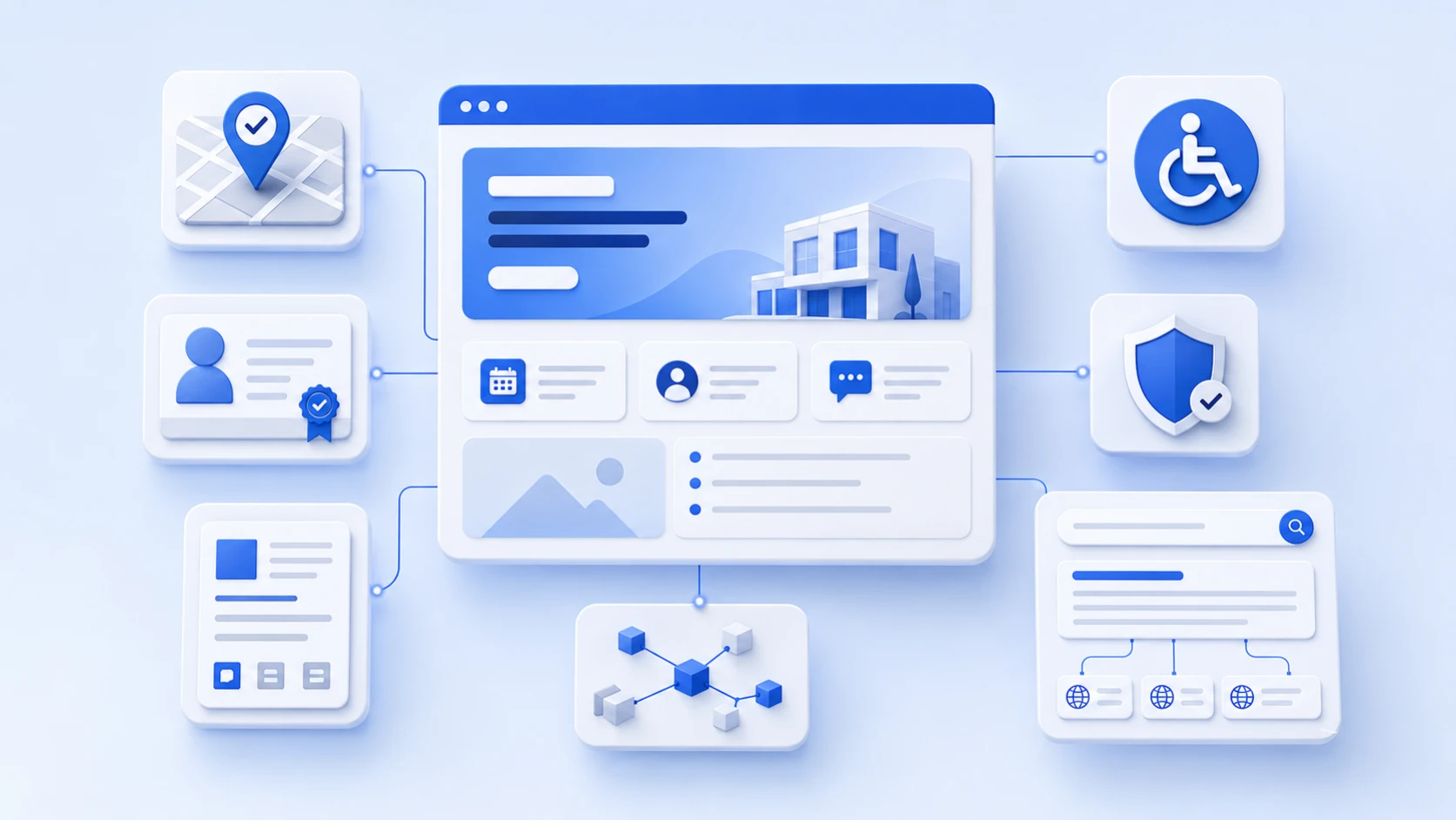
The best SEO strategies for healthcare websites begin with trust. Build accurate service, location and practitioner pages before scaling a blog. Put clinical content through a documented expert-review process. Make the site easy to crawl, fast to use, accessible to people with disabilities and clear about who is responsible for the information. Then strengthen local visibility, internal links, structured data and measurement.
That order matters. A healthcare site can attract traffic and still fail patients if its claims are unclear, its booking route is confusing or its content has no qualified reviewer. It can also create unnecessary risk if marketing tags, forms or third-party tools are added without privacy review.
This guide covers search strategy for healthcare organizations and provider websites. It is not medical or legal advice. Clinical claims should be written or reviewed by appropriately qualified professionals. Privacy, accessibility and regulatory decisions should be reviewed by the organization's own legal, compliance and security teams.
What should a healthcare website prioritize for SEO?
A healthcare website should prioritize the pages patients use to understand a service and choose an appropriate provider. In most cases, the order is: service pages, location pages, practitioner profiles, patient-information pages, local business profiles, technical foundations, clinically reviewed educational content and measurement.
| Priority | Website asset | Searcher's question | Evidence required |
|---|---|---|---|
| 1 | Service or treatment page | Do you provide the care I need? | Accurate scope, eligibility, process, limitations and reviewer |
| 2 | Location page | Can I access this service near me? | Real address, hours, contact details, accessibility and local services |
| 3 | Practitioner profile | Who will provide my care? | Current qualifications, role, specialty and professional registration where relevant |
| 4 | Patient-information page | What should I expect? | Plain-language guidance, dates, sources and clinical review |
| 5 | Local presence | Is this an established provider? | Verified business details and genuine patient feedback handled appropriately |
| 6 | Technical foundation | Can search engines and people use the site? | Crawlability, indexation, performance, mobile UX and accessible components |
| 7 | Educational content | Can this organization answer my question safely? | Original explanation, qualified review, sources and clear boundaries |
Why is healthcare SEO different from ordinary SEO?
Health information can influence decisions that affect a person's wellbeing. Google describes health-related material as a potential Your Money or Your Life, or YMYL, topic and says its systems give greater weight to content that aligns with strong experience, expertise, authoritativeness and trust for such subjects. Google also makes an important distinction: E-E-A-T is not one single ranking factor, and adding an author box does not automatically make a page trustworthy.
For a healthcare organization, trust has to be visible in the work itself:
- The page identifies the organization and the person responsible for its clinical accuracy.
- Claims are supported by current, appropriate sources.
- The content says who a service is and is not suitable for without diagnosing the reader.
- Dates of publication and clinical review are clear.
- Practitioner credentials and organizational details can be verified.
- Commercial relationships and conflicts are disclosed where relevant.
- The page gives a safe next step, including urgent-care or emergency guidance where the clinical team determines it is necessary.
NexaFlow can advise on website structure, search visibility, analytics and technical delivery. We do not supply clinical judgment. That boundary should remain clear in the finished page.
1. Map search intent before choosing keywords
Keyword research should begin with the patient or buyer journey, not a list exported from a tool. Group queries by the decision they support:
- Service intent: cardiology clinic, physical therapy, mental health assessment or a named treatment.
- Location intent: service plus city, neighborhood or “near me.”
- Practitioner intent: specialty, qualification, language, availability or provider name.
- Preparation intent: what happens before, during or after an appointment.
- Risk and eligibility intent: who may be suitable, warning signs and when to seek a different level of care.
- Cost and access intent: insurance, self-pay, referral, waiting time or accessibility.
- Brand intent: reviews, contact details, clinicians, locations and policies.
Assign one primary page to each meaningful intent. Do not create five near-identical location or condition pages just because five keywords exist. If two pages serve the same audience, answer the same question and offer the same next step, consolidate them.
2. Build service pages before publishing at scale
A blog can create awareness, but a service page is usually where a prospective patient confirms whether the organization can help. Every major service page should answer the practical questions a person needs before contacting the provider.
Include:
- What the service is, in plain language
- Who provides it and where it is available
- The problems or needs it addresses, using clinically approved language
- What an assessment or appointment involves
- Eligibility, referral or access requirements
- Important limitations and alternatives
- Cost, insurance or payment information when available
- What happens next
- A named clinical reviewer and review date
- Links to relevant practitioner, location and patient-information pages
Avoid promising results, using fear to create urgency or copying manufacturer copy without context. A strong page helps a person make a better-informed next decision, even if that decision is not to book.
3. Create useful location and practitioner pages
Location pages should represent real facilities, not keyword placeholders. Give each page a distinct purpose by including the services available at that site, opening hours, phone number, transport and parking details, physical accessibility information, photographs, directions and any appointment restrictions.
Practitioner profiles should identify the person's current role, qualifications, specialties, languages, professional memberships or registrations where appropriate, and the locations where they practice. Claims should be checked and updated when a clinician's role changes.
Connect these page types. A service page should link to the clinicians and locations that actually provide it. A practitioner page should link back to relevant services. This creates a useful path for patients and a clearer site structure for search systems.
4. Establish a clinical content-governance process
Publishing more frequently is not a substitute for clinical control. Set a workflow before the editorial calendar grows.
For each health-related page, record:
- The intended audience and question
- The writer and the basis of their experience
- The qualified clinical reviewer
- The sources and the date they were checked
- The claims that require approval
- The review date or event that will trigger an update
- The person who can correct or remove the content
A clinically reviewed page can still be unhelpful if it is generic. Add original value through the provider's real process, questions patients commonly ask, preparation instructions approved by the care team and clear explanations of what the organization does differently. Do not invent patient stories or outcomes.
5. Strengthen local SEO without manufacturing trust
For location-based healthcare services, claim and maintain the correct Google Business Profile. Keep the name, address, phone number, category, hours and website destination consistent. Use the most specific accurate business category and link each verified location to the corresponding location page.
Reviews can help prospective patients assess a provider, but healthcare organizations need a careful response policy. Never reveal or confirm a person's patient status in a public reply. Do not offer incentives that breach platform rules or applicable professional requirements. Ask the organization's privacy and legal teams to approve the process.
Local visibility also benefits from accurate listings on relevant professional bodies, health systems, insurers and trusted local organizations. Those listings should be earned and factual, not purchased in bulk simply to create citations.
6. Fix crawlability, mobile usability and performance
Search engines cannot rely on content they cannot access, and patients should not have to fight the website to reach care information.
Check that:
- Important public pages return a successful status and are not blocked from crawling.
- Canonical tags point to the intended version of each page.
- The XML sitemap contains indexable, current URLs only.
- Navigation and internal links use crawlable links.
- Appointment and contact functions work on mobile devices.
- Consent tools do not unnecessarily hide the main content.
- Images are compressed and dimensioned to reduce layout shifts.
- Third-party scripts are limited and tested.
- Redirects preserve useful old URLs after a migration.
Google recommends good Core Web Vitals as part of a strong page experience, but a perfect performance score is not the entire strategy. Prioritize the real patient journey: finding a service, understanding it and taking the next appropriate step.
7. Treat accessibility as part of the service
Accessibility is more than an SEO checkbox. The US Department of Justice explains that inaccessible web content can deny people with disabilities equal access to information, and its guidance points organizations toward established standards such as WCAG.
Test headings, keyboard access, focus states, form labels, error messages, color contrast, alternative text, captions, zoom behavior and document formats. Make appointment forms and essential instructions usable with assistive technology. Automated scans can identify some defects, but they do not replace manual testing by people who understand accessible interaction.
The legal requirements differ by organization and jurisdiction. The appropriate team should determine the standard that applies; the design and development team should then implement and test it.
8. Review tracking, forms and third-party tools before launch
Healthcare analytics needs more scrutiny than adding a standard tag bundle. HHS maintains guidance on online tracking technologies and the HIPAA obligations of covered entities and business associates. HIPAA does not apply to every health-related business in the same way, and other federal or state privacy rules may still matter.
Before deploying analytics, advertising pixels, chat widgets, session recording or form integrations, document:
- What data the tool collects
- Which pages and fields it can access
- Where the data is sent and stored
- Whether identifiers or health-related context could be disclosed
- Which agreements and configurations are required
- Who approved the implementation
- How consent, retention and deletion are handled
Do not describe a website, form or analytics setup as “HIPAA compliant” based only on a vendor badge. HHS states that it does not certify private products as Privacy Rule compliant. Obtain a review that reflects the organization, data flows and actual configuration.
9. Use structured data accurately
Structured data can help search engines interpret details that are already visible on the page. Use supported types that match the content, such as Organization, LocalBusiness, Breadcrumb and Article, and include only information the user can verify on the page.
Schema does not guarantee a rich result, a ranking or an AI Overview citation. Google says that even technically valid pages are not guaranteed to be crawled, indexed or served. Treat structured data as a clarity layer, not a shortcut.
10. Make the content easier to use in AI-generated answers
There is no separate “AI Overview schema.” Google's current documentation says the same SEO foundations apply to its AI features. A page still needs to be accessible, indexable and eligible to appear in Search.
Healthcare pages can make their information easier to understand and cite by:
- Answering the main question near the top
- Using precise headings that reflect patient questions
- Defining medical terms in approved plain language
- Separating facts, options, risks and next steps
- Naming the author and qualified reviewer
- Linking important claims to current primary or authoritative sources
- Showing publication and review dates
- Keeping organization, practitioner and location facts consistent
- Publishing original information the provider is qualified to share
Do not flatten nuanced medical advice into a definitive one-line answer merely to target AI search. Accuracy and patient safety come first.
A practical 90-day healthcare SEO plan
| Period | Work | Deliverable |
|---|---|---|
| Days 1-30 | Confirm services, audiences, locations, reviewers and privacy owners; audit indexation, templates and analytics | Approved page map, technical findings and content-governance workflow |
| Days 31-60 | Repair the strongest service, location and practitioner pages; fix priority technical and accessibility issues | Search-ready commercial core with named ownership |
| Days 61-90 | Publish clinically reviewed supporting content; improve local profiles, internal links and measurement | First topic cluster and baseline performance report |
How should healthcare SEO success be measured?
Track outcomes that reflect access and qualified demand, not blog volume alone:
- Non-brand impressions and clicks to service and location pages
- Visibility for the intended service and local query groups
- Calls, appointment requests and other approved conversion actions
- Engagement with practitioner and patient-information pages before contact
- Accuracy and completeness of local profiles
- Index coverage and Core Web Vitals by page template
- Accessibility issues found and resolved
- Content that is current, reviewed and awaiting review
- AI mentions and citations for a fixed set of patient questions
- Qualified enquiries rather than every form submission
Use aggregated data and privacy-approved reporting. Do not expose sensitive patient information in marketing dashboards.
Common healthcare SEO mistakes
- Publishing generic medical articles without qualified review
- Creating a page for every keyword variation
- Hiding the service details behind vague brand language
- Listing credentials or locations that are no longer current
- Treating schema as a ranking guarantee
- Adding trackers and chat tools without a data-flow review
- Copying condition information without adding provider-specific value
- Ignoring accessibility until after the build
- Measuring traffic without checking whether patients reached the right service
Where should a healthcare organization begin?
Begin with an evidence and page-map workshop. Confirm what the organization is qualified to say, which services and locations need to be found, who can review clinical content and which technical or privacy constraints affect the build. Then repair the pages closest to the patient decision before expanding the blog.
NexaFlow's background in managed services, cloud infrastructure, Azure and Microsoft environments informs how we approach technical delivery, tracking and multi-stakeholder website projects. It does not make us clinicians or healthcare counsel. We work best when the organization's clinical, compliance and security owners remain part of the process.
If your site attracts healthcare searches but gives visitors no clear route to the right service, talk to NexaFlow about a search and website audit.
Sources and Review Notes
- Google Search Central: Creating helpful, reliable, people-first content
- Google Search Central: AI features and your website
- Google Search Central: Local business structured data
- Google Search Central: Core Web Vitals
- HHS: HIPAA guidance materials
- HHS: The HIPAA Privacy Rule
- ADA.gov: Guidance on web accessibility and the ADA