%20(1).avif)



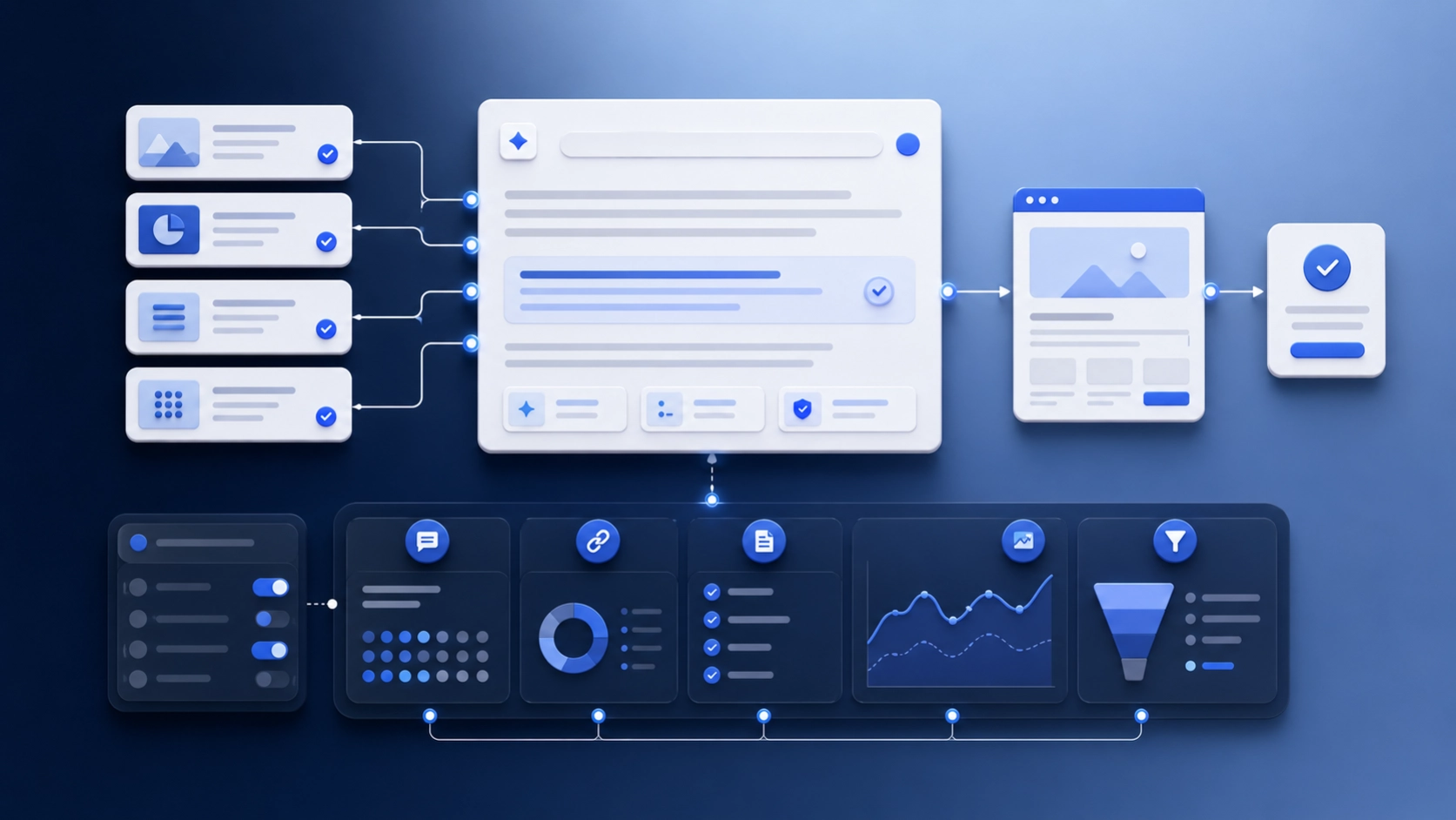
An ERP implementation proposal should define the problem, target outcomes, scope, responsibilities, delivery phases, data migration, integrations, testing, training, timeline, price, assumptions, exclusions, change control and acceptance process. If any of those areas is vague, the proposal is selling confidence the delivery team may not be able to support.
This guide is written for ERP implementation partners responding after discovery or to a formal RFP. It is a commercial and communication template, not legal advice and not a substitute for the final statement of work.
What Should an ERP Proposal Include?
A strong ERP proposal should include an executive summary, client situation, agreed outcomes, scope matrix, solution approach, project phases, governance, team, migration and integration plans, testing, training, security responsibilities, schedule, pricing, assumptions, exclusions, change control, acceptance criteria and support model.
ERP Proposal, RFP Response and Statement of Work Are Not the Same
| Document | Main job | Typical level of detail |
|---|---|---|
| RFP response | Answer the buyer's stated questions and prove compliance | Requirement-by-requirement response with evidence |
| Proposal | Recommend a commercial and delivery route | Outcome, scope, approach, team, price, assumptions and next step |
| Statement of work | Create the detailed contractual delivery baseline | Deliverables, responsibilities, dates, acceptance, change and legal terms |
| Project plan | Control work after agreement | Tasks, owners, dependencies, environments, milestones and status |
A proposal can refer to the planned SOW, but it should not hide a weak scope behind “details to follow.” The buyer needs enough information to compare approaches and expose dangerous assumptions before signing.
Before Writing: Run a Bid and Scope Check
Do not turn every enquiry into a polished proposal. First confirm whether the opportunity is real and whether the team has enough information to price it responsibly.
- Is the platform selected, or is selection still part of the work?
- Which legal entities, regions and business units are in scope?
- Which modules and processes are included?
- What legacy systems and integrations exist?
- Who owns source-data quality and cleanup?
- What is the target date, and what drives it?
- Who can approve scope and budget?
- Is the buyer comparing like-for-like services?
- Which requirements remain unknown?
If the answers are incomplete, propose a paid discovery or readiness phase. A fixed implementation price built on guesses is not buyer-friendly. It simply moves the argument to later.
ERP Proposal Template: Recommended Order
| Section | What to include | Main reader |
|---|---|---|
| 1. Executive summary | Situation, recommendation, outcome and decision required | Executive sponsor |
| 2. Current state | Processes, systems, constraints and confirmed facts | Business and IT leads |
| 3. Outcomes | Business and operational results with measures | Sponsor and finance |
| 4. Scope matrix | In scope, optional, client-owned, third-party and excluded work | Procurement and delivery |
| 5. Solution approach | Platform, modules, environments, integrations and design choices | IT and process owners |
| 6. Delivery plan | Phases, milestones, dependencies and decision gates | Project leadership |
| 7. Governance and team | Roles, capacity, escalation and named specialists | All stakeholders |
| 8. Assurance | Migration, testing, security, training, cutover and support | IT, risk and operations |
| 9. Commercials | Fees, payment, expenses, options, assumptions and change control | Finance and procurement |
| 10. Acceptance and next step | Approval process, validity and path into the SOW | Decision makers |
1. Write the Executive Summary Around the Client
The first page should explain what the buyer is trying to change, why the current state is a problem, what the partner recommends and what result the work should support. It should not begin with the partner's history.
A useful structure is:
- Current position: the confirmed operational or system issue.
- Business effect: the cost, risk or limitation it creates.
- Recommended route: the implementation approach being proposed.
- Expected outcome: the result, with a measure where one is agreed.
- Decision required: what the buyer needs to approve next.
Do not promise a percentage saving unless the baseline and calculation are documented. If the outcome depends on adoption, data cleanup or another supplier, say so.
2. Confirm the Current State and Desired Outcomes
Separate confirmed facts from working assumptions. The current-state section may cover legacy systems, manual work, reporting gaps, controls, integration problems, data quality, user groups and geographic scope.
Then list the desired outcomes in plain language. “Implement Oracle” is not an outcome. “Close the month within five working days using one approved chart of accounts” is closer, provided the client has agreed the measure.
3. Use a Scope Matrix Instead of a Feature Dump
The scope matrix is the heart of the proposal. For every major workstream, show what the partner owns, what the client owns, what is optional and what is excluded.
| Workstream | Partner responsibility | Client responsibility | Exclusion or dependency |
|---|---|---|---|
| Process design | Facilitate workshops and document approved design | Provide process owners and approve decisions | Redesign outside agreed processes excluded |
| Configuration | Configure approved requirements | Approve configuration and provide test users | Custom development priced separately unless listed |
| Data migration | Map, transform, load and reconcile agreed objects | Clean source data and approve reconciliation | Unlisted history and source remediation excluded |
| Integrations | Build or configure named interfaces | Provide third-party access and contacts | Third-party fees and undocumented APIs excluded |
| Training | Train agreed roles and provide listed materials | Schedule users and maintain internal procedures | Organization-wide change program excluded unless listed |
Adjust the matrix to the project. A reusable template should reduce omissions, not erase the differences between clients.
4. Explain the Solution Without Copying the Product Brochure
The solution section should show how the proposed ERP setup fits the agreed processes and constraints. Include products, modules, environments, extensions, interfaces, reporting and any major design principle.
For IFS, NetSuite, Sage, Oracle or Dynamics work, use the vendor's current product names and verify partner claims. Do not paste feature language that has no link to the buyer's requirements.
5. Show the Delivery Phases and Decision Gates
Use phase names that match the team's real method. A typical implementation may include discovery, solution design, build and configuration, migration and integration, testing, training, cutover, stabilization and ongoing support.
Microsoft's Success by Design framework treats governance and risk review as ongoing project work, not a final check. NetSuite's implementation guidance also separates planning, design, development, testing, deployment and support. The proposal should show where decisions are reviewed and signed off.
For each phase, state:
- Purpose
- Deliverables
- Client inputs
- Dependencies
- Acceptance or decision gate
- What happens if the gate is missed
6. Name the Team and Define Governance
Buyers need to know who will perform the work, not only who presented the pitch. Include the proposed roles, named people where possible, expected allocation, location, subcontractor use and replacement process.
Define the sponsor, steering group, project managers, solution architect, functional leads, technical leads, data owners, test lead, change lead and process owners as required. Add meeting cadence, decision rights, escalation route and issue management.
If named staff cannot be guaranteed until a start date is agreed, state that clearly and define the minimum role profile the replacement must meet.
7. Treat Data Migration as a Workstream
“Data migration included” is not enough. List source systems, data objects, history, volumes where known, quality responsibilities, mapping, transformation, load cycles, reconciliation, acceptance and cutover ownership.
Microsoft's Dynamics 365 data-management guidance separates configuration and migration data and calls for defined roles and a migration strategy. IFS technical documentation also describes migration as a distinct process with application validation. Use the relevant platform guidance when scoping the actual project.
8. List Every Integration and Its Boundary
Create an integration register in the proposal or appendix. For each interface, list direction, frequency, data, method, owner, third-party dependency, security requirement, environment and acceptance test.
“Integrate CRM” could mean a standard connector, a custom API build or several event-driven workflows. Those are not the same scope. If discovery has not reached that detail, price an investigation rather than hiding a placeholder.
9. Define Testing and Acceptance
State which testing types are included and who prepares, runs and approves them. Depending on the project, this may cover unit, system, integration, migration, security, performance, user acceptance and regression testing.
Microsoft's current go-live checklist calls for signed-off integration, user-acceptance and performance testing, plus migration, cutover, training and production-support plans. See the official go-live guidance.
Define defect severity, entry and exit criteria, retest responsibilities and what constitutes acceptance. A deadline is not an acceptance criterion.
10. Cover Training, Adoption and Client Capacity
Explain whether the proposal includes train-the-trainer sessions, role-based training, job aids, recordings, office hours or a full change program. State who creates client-specific operating procedures and who schedules users.
Also show the client capacity required. A project cannot be delivered by the partner alone if process owners, data stewards and test users are unavailable.
11. Make the Timeline Conditional on Real Dependencies
Show phases, milestones and decision gates, then list what can move the dates. Common dependencies include contract signature, environment access, process-owner availability, data readiness, third-party APIs, security review and approval turnaround.
Do not present a date as guaranteed when it depends on unconfirmed data or another supplier. Use a target date with stated assumptions and a process for re-baselining.
12. Present Pricing So It Can Be Compared
State the pricing model, fee by phase or workstream, payment schedule, expenses, taxes, license exclusions, optional items and validity period. If the work mixes fixed price, time and materials, and consumption charges, separate them.
Three-option pricing can work when the options reflect real scope choices. Do not create a weak package purely to make the middle price look attractive.
13. Put Assumptions and Exclusions Beside the Price
Assumptions should be testable. “The client will be supportive” is useless. “The client will provide two named finance process owners for four hours per week during design and UAT” can be planned.
Common areas to address include:
- Number of entities, users, environments and integrations
- Data objects and historical periods
- Language and localization
- Client and third-party resources
- Travel and working hours
- Custom development
- Security and compliance assessment
- License and infrastructure costs
- Post-go-live support period
14. Define Change Control Before Scope Changes
The proposal should explain how a change is raised, assessed, priced, approved and added to the schedule. It should also state who can authorize it.
A good change request records the reason, description, options, effect on price, effect on dates, new risks and decision. Starting extra work before approval creates avoidable conflict.
15. Add Proof That Matches the Proposed Work
Use case studies, references, certifications and team profiles that relate to the platform, industry or project risk in question. A logo wall is not proof of who did what.
For each case study, show the client context, starting problem, partner scope, constraint, result and how the claim was approved. If the example is anonymized, say why.
16. Explain Cutover, Stabilization and Support
State how go-live readiness is assessed, who approves cutover, what rollback or continuity planning is expected, how hypercare works and when responsibility moves into support.
Include support hours, channels, severity definitions, response targets, handover deliverables and exclusions. Do not use “24/7 support” unless the contract and staffing model support it.
ERP Proposal Design Rules
- Put the recommendation and decision near the front.
- Use a table for scope, responsibilities and options.
- Keep one term for each role and deliverable.
- Use diagrams only when they make systems or governance easier to understand.
- Move detailed requirement responses into a searchable appendix.
- Use page numbers, version control and a clear confidentiality label.
- Do not shrink text to fit an arbitrary page count.
- Make the final PDF accessible and test links before sending.
The deck should look controlled because the project must be controlled. Decorative screens and product mockups cannot repair a vague scope.
Proposal Red Flags Buyers Notice
- The sales team is named but the delivery team is not
- Every requirement is marked “supported” with no explanation
- Data migration has one sentence
- Integrations are grouped into one fixed allowance
- Training and change management are treated as the same task
- The timeline has no client dependencies
- Pricing excludes items that appear included elsewhere
- Acceptance means only that a date has passed
- Security claims have no owner or evidence
- Case-study results have no context
A Sensible Proposal Production Workflow
- Run the bid and scope check.
- Build the compliance matrix if an RFP exists.
- Hold a short solution, delivery and commercial review.
- Draft scope and assumptions before designing pages.
- Ask the proposed delivery lead to challenge the scope.
- Complete security, legal and finance review as required.
- Design the approved content using a controlled template.
- Proofread names, numbers, dates, links and cross-references.
- Export an accessible PDF and retain the editable source.
- Log buyer questions for the SOW and future sales material.
How This Differs From the Existing ERP Sales-Enablement Guide
NexaFlow's ERP sales-enablement guide maps the full set of assets needed across a committee sale. This article goes deeper on one asset: the implementation proposal. It is intended to help the commercial and delivery teams agree what must be stated before the document is designed.
Need the Proposal Turned Into a Clear Buyer Document?
NexaFlow can structure and design ERP proposals, sales decks and supporting diagrams while the implementation partner remains responsible for delivery scope, technical claims and legal approval. See the presentation and deck design service or book a call about the proposal.